Bali and Dubai are often mentioned in the same breath by lifestyle investors: both are sunny, tourist-heavy, Instagram-friendly markets with strong short-term rental demand. The comparison stops being simple the moment a buyer asks a lawyer one question: what exactly will I own? In Dubai, a foreign buyer in a designated freehold zone receives a Title Deed registered with the Dubai Land Department (DLD), the same form of ownership a UAE national holds (DLD, property sale registration). In Indonesia, a foreign individual cannot hold that equivalent right at all. This piece compares ownership structure, price, yield and tax, and treats the freehold-versus-leasehold gap as the central fact of the decision, not a footnote.
The core difference: freehold ownership vs leasehold-only rights
Under Indonesia's land law, the strongest land title, Hak Milik (freehold), is reserved for Indonesian citizens and Indonesian legal entities. Foreign individuals are not among the eligible holders of Hak Milik. Instead, Government Regulation No. 18/2021 on Land Rights and Registration lists "Foreigners" as one of five categories eligible for Hak Pakai, a time-limited right-to-use, alongside Indonesian citizens, Indonesian legal entities, foreign legal entities with a representative office in Indonesia, and religious or social institutions (PP 18/2021, Article 49). Hak Pakai on state land is granted for a maximum of 30 years, extendable by up to 20 years and renewable for a further 30 years, an 80-year ceiling after which the land reverts to being directly controlled by the state (PP 18/2021, Article 52) (PP 18/2021, official ATR/BPN translation).
A foreigner who wants to hold a residential house or villa must additionally hold valid immigration documents (a KITAS or KITAP residence permit), and ownership is capped by minimum price, land area and purpose thresholds set by ministerial regulation (PP 18/2021, Articles 69 to 72). The one carve-out is condominium-style apartment units, where a licensed foreigner can hold a form of registered strata ownership, but that unit still sits on land held under Hak Pakai or Hak Guna Bangunan, not freehold (PP 18/2021, Article 67).
Much of the villa inventory marketed to foreigners in Bali under the label "leasehold" is a different thing again: a private lease agreement (sewa) over land whose Hak Milik title stays with an Indonesian owner. Indonesian regulation allows such a lease to be recorded against the land certificate at the Land Office, but the arrangement remains a personal contractual right between two parties, not a proprietary land title in the buyer's own name (PP 18/2021, Article 90). Its strength depends heavily on the drafting of that private contract and the good standing of the underlying Indonesian titleholder, exactly the kind of counterparty risk a Dubai Title Deed removes entirely.
Dubai took the opposite policy path. Since freehold zones were opened to foreign ownership, a buyer's Title Deed is registered directly with the DLD in the buyer's own name, indefinitely, with no residency permit or local partner required to hold it (DLD, property sale registration).
Price levels
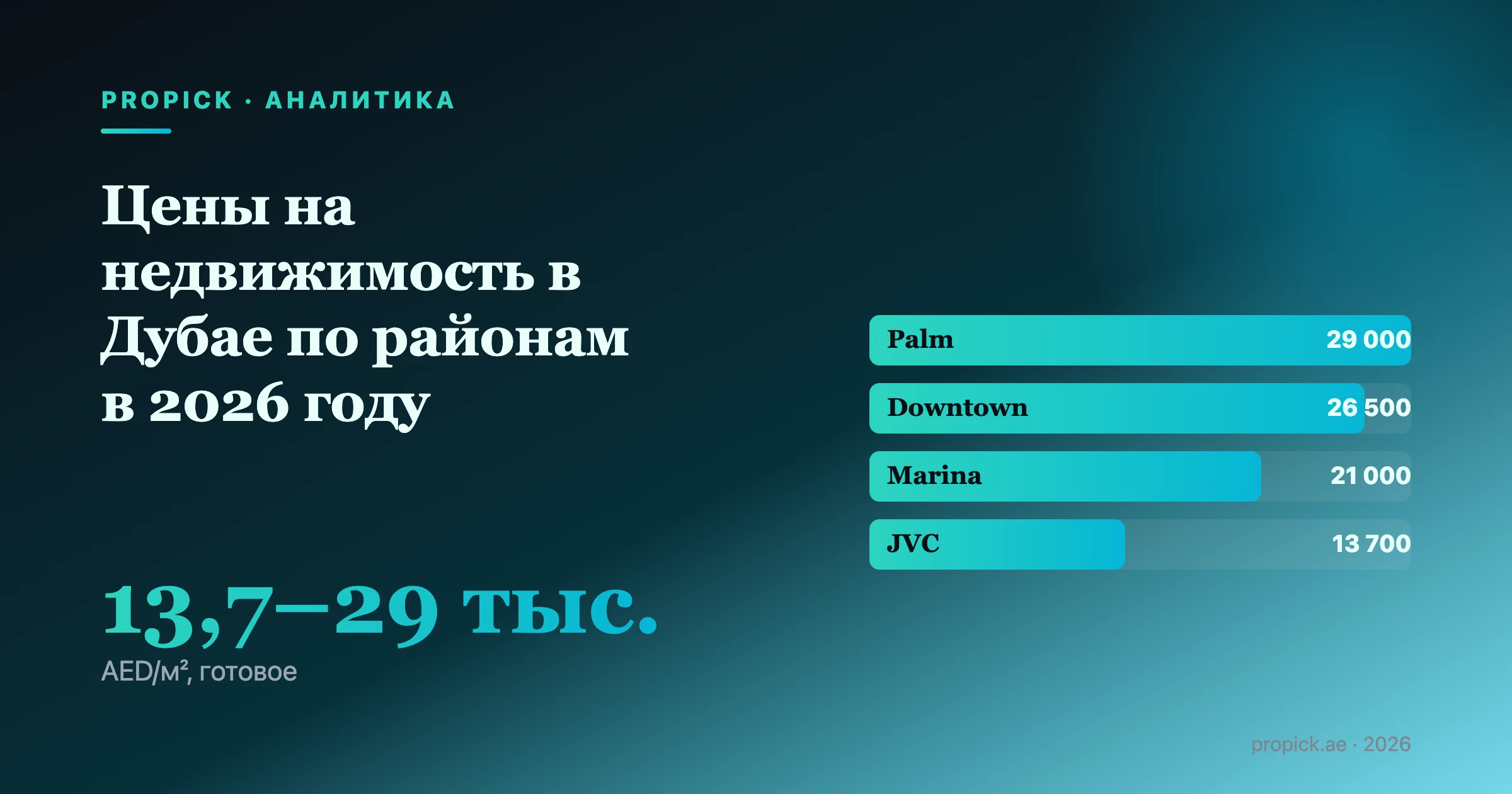
Dubai's prime segment, per DLD Open Data, currently prices at AED 19,360 per sqm in Dubai Marina, AED 26,323 per sqm in Downtown Dubai and AED 28,702 per sqm on Palm Jumeirah (DLD Open Data).
Indonesia does not publish an equivalent official per-sqm price series for Bali villas comparable to DLD's open dataset, and that absence is itself a data point: a Dubai buyer can check a government price registry before signing, a Bali buyer generally cannot. Villa asking prices circulating in the market vary enormously by area, land right and build quality, and this article does not repeat unverified marketing figures. What is verifiable is the legal status of the land under any given asking price, which is the freehold-versus-leasehold question above.
Rental yield: a headline number and a hidden decay
Bali villa listings are frequently marketed with high advertised gross yields, but those figures come from operators and agencies, not from an Indonesian government statistical release, so they are not independently verifiable and are not repeated here as fact. What is structural, not marketing, is leasehold decay: a Hak Pakai right or a private lease agreement has a finite remaining term, so every year of ownership consumes part of the asset's value, and buyers commonly need to model this amortization against income the way a bond investor prices a maturity date, something a Dubai freehold owner never has to do.
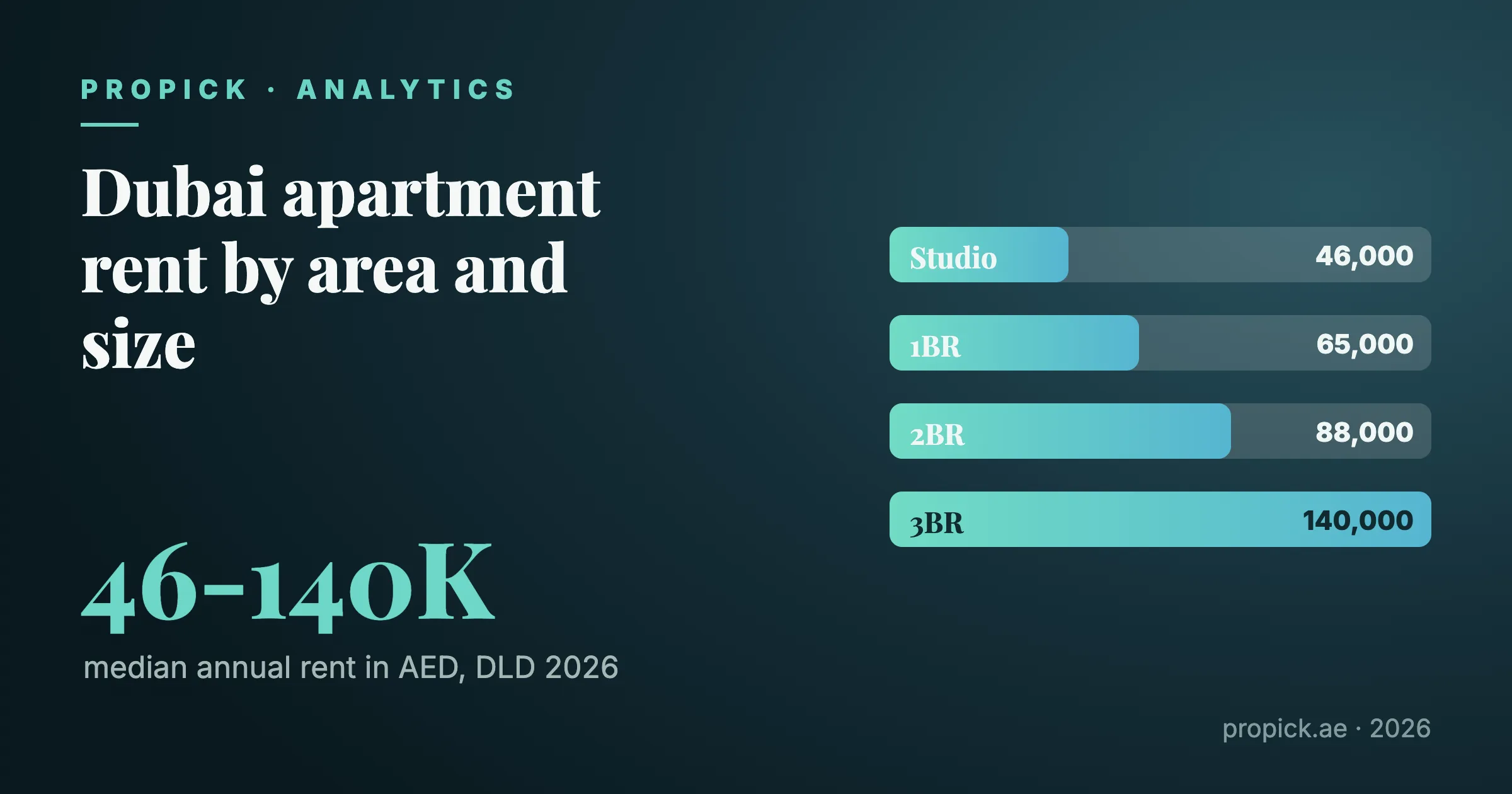
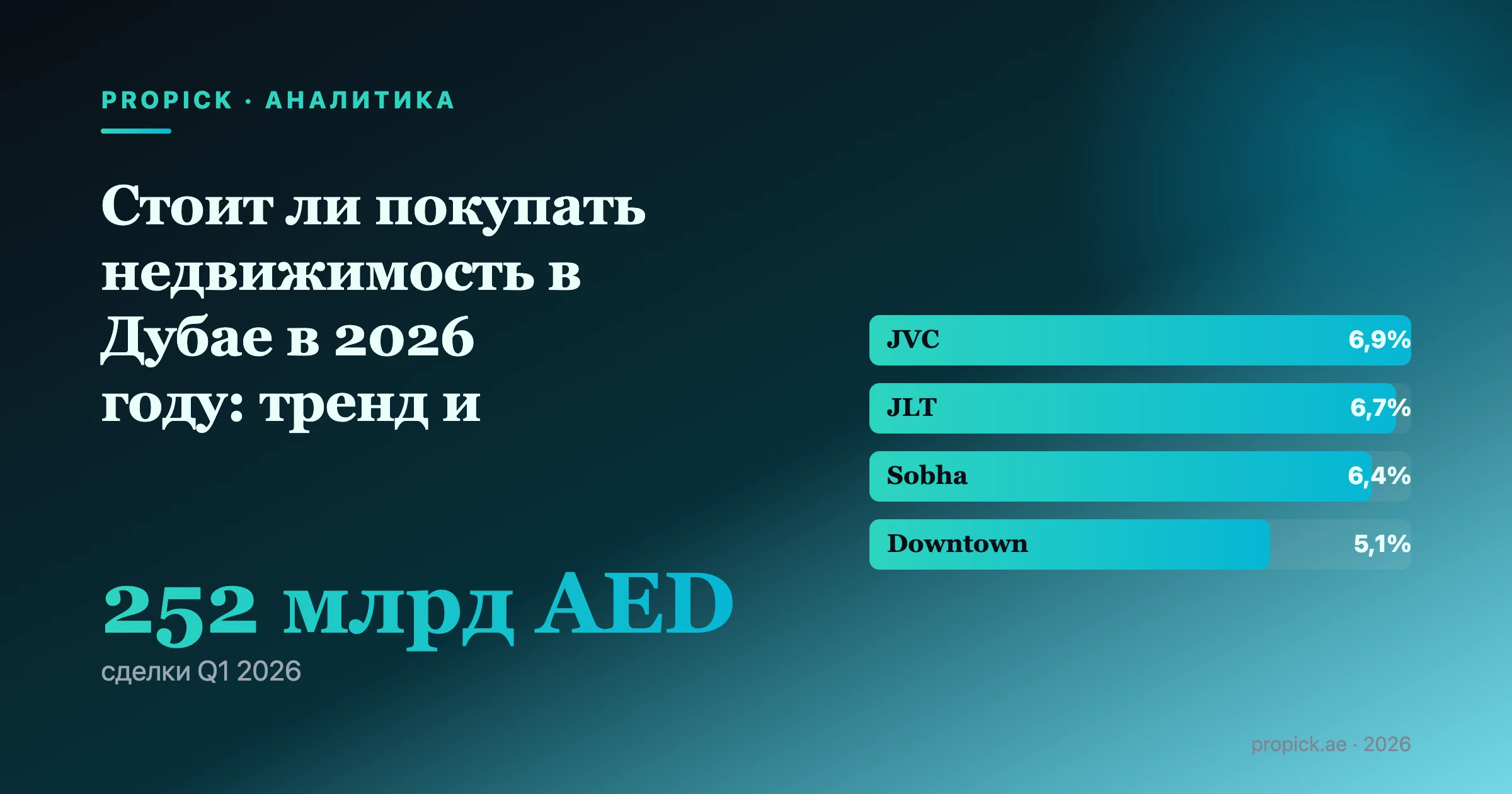
Dubai's gross yields, drawn from DLD-linked market data, run 5.4 to 6.3 percent in prime areas such as Downtown and the Marina, and 7 to 9 percent in more affordable, high-demand communities. That yield accrues to an asset with no expiry date.
Tax burden
Dubai charges no annual property tax, no capital gains tax and no personal income tax on rental income. The only transaction cost at purchase is the DLD registration fee of 4 percent of the sale value, which in practice is paid by the buyer (DLD, property sale registration).
Indonesia's tax stack applies at every stage of ownership:
- Acquisition duty (BPHTB): capped at a maximum rate of 5 percent, levied on the transaction value less a local tax-free threshold set by each regional government (Directorate General of Taxes, "Mau Beli Tanah, Apa Saja Pajaknya?").
- Annual land and building tax (PBB): a national rate of 0.5 percent applied to the government-assessed taxable value (NJKP), which is itself a percentage of the officially appraised value (NJOP), not the market price (Directorate General of Taxes, Pajak Bumi dan Bangunan).
- Tax on rental income: a final tax of 10 percent of the gross rental value of land and/or buildings, under Government Regulation No. 34/2017 (Directorate General of Taxes, income tax on land/building rental).
None of these Indonesian levies depends on nationality; they apply to whoever holds the right, foreign or Indonesian. What does depend on nationality is which right a foreigner is legally allowed to hold in the first place.
Dubai vs Bali at a glance
| Metric | Dubai | Bali/Indonesia (foreign buyer) |
|---|---|---|
| Ownership available to foreigners | Freehold Title Deed, registered with DLD, held indefinitely in the buyer's own name | No Hak Milik (freehold); only Hak Pakai (right-to-use, max 30 plus 20 plus 30 years) or a private leasehold contract on land still titled to an Indonesian owner |
| Legal basis | DLD registration, property sale process | Basic Agrarian Law framework; PP 18/2021, Articles 49, 52, 69 to 72 |
| Prime price level | AED 19,360 to 28,702/sqm, Marina to Palm Jumeirah (DLD Open Data) | No official per-sqm registry published; market asking prices are not independently verifiable |
| Gross rental yield | 5.4 to 6.3% prime; 7 to 9% affordable, on an asset with no expiry | Advertised yields are agency-sourced, not government-published; leasehold/right-to-use term decay reduces effective long-run return |
| Purchase/acquisition tax | DLD fee: 4% of sale value, paid in practice by the buyer | BPHTB: up to 5% of transaction value minus a local threshold |
| Annual property tax | None | PBB: 0.5% of assessed value (NJKP/NJOP) |
| Tax on rental income | None | 10% final tax on gross rental value |
| Capital gains tax | None | Not addressed by the sources cited here |
| Security of title | Registered proprietary title in the buyer's name | Time-limited right-to-use, or a personal lease contract, not a proprietary freehold title |
Which investor fits which market
An investor whose priority is security of title, a registered freehold asset in their own name, and a simple, flat cost structure will find Dubai the more legally straightforward market: one 4 percent entry fee, no recurring tax, and ownership with no built-in expiry date. An investor drawn to Bali is typically buying a lifestyle asset and a tourism-linked income stream, and needs to underwrite that purchase as a leasehold or right-to-use position with a finite term and a recurring Indonesian tax bill, not as freehold real estate in the Dubai or home-market sense. Both can be reasonable choices for the right buyer, but they are not the same asset class, and the freehold-versus-leasehold distinction is the single fact that should shape every other number in the decision.
FAQ
Can a foreigner own freehold land in Bali? No. Hak Milik, Indonesia's freehold title, is reserved for Indonesian citizens and Indonesian legal entities. Foreign individuals may hold Hak Pakai, a time-limited right-to-use capped at 30 years plus a 20-year extension plus a 30-year renewal, or a private leasehold agreement over land still titled to an Indonesian owner (PP 18/2021, Articles 49 and 52).
Can a foreigner own an apartment in Bali the way they can in Dubai? Partially. A licensed foreigner can hold a registered strata title on an apartment unit, but the land beneath it is still held under Hak Pakai or Hak Guna Bangunan, not Hak Milik freehold, unlike a Dubai Title Deed, which covers the property outright in the buyer's own name (PP 18/2021, Article 67).
Does Dubai really have no property tax at all? Correct. There is no annual property tax, no capital gains tax and no income tax on rental income in Dubai. The only cost at purchase is the DLD registration fee of 4 percent of the sale value, paid in practice by the buyer (DLD).
What taxes does a foreign owner pay in Indonesia? An acquisition duty (BPHTB) capped at 5 percent of transaction value at purchase, an annual land and building tax (PBB) of 0.5 percent of the assessed value, and a final 10 percent tax on gross rental income, all regardless of nationality (pajak.go.id, BPHTB; pajak.go.id, PBB; pajak.go.id, rental income tax).
Is a Hak Pakai right the same thing as a Western-style leasehold? Not exactly. Hak Pakai is a formal, government-registered land right with a statutory maximum term of 80 years across an initial grant, one extension and one renewal. A "leasehold" villa deal marketed to tourists is often instead a private lease contract over land still titled to an Indonesian owner under Hak Milik, which can be noted on the land certificate but is not itself a registered proprietary right in the buyer's name (PP 18/2021, Articles 52 and 90).
Sources
- Dubai Land Department, Property Sale Registration
- Dubai Land Department, Open Data: Real Estate Data
- Government Regulation No. 18/2021 on Land Rights, Rights over Land, Apartment Units and Land Registration, official English translation, ATR/BPN
- Directorate General of Taxes, "Mau Beli Tanah, Apa Saja Pajaknya?" (BPHTB)
- Directorate General of Taxes, Pajak Bumi dan Bangunan (PBB)
- Directorate General of Taxes, income tax on rental of land and/or buildings