Both cities attract international property buyers with warm-weather lifestyle appeal and a lower cost of entry than most Western capitals. But before comparing price or yield, an investor has to confront a difference that sits underneath everything else: what a foreigner is actually allowed to own. In Dubai, a foreigner can own the freehold outright. In Bangkok, they cannot own the land at all, and can only own a condominium unit within a strict quota. That single distinction shapes the entire comparison.
The Ownership Rule That Comes First
In Dubai's designated freehold zones, a foreign national can own property outright, registered in their own name with a Title Deed issued by the Dubai Land Department. The ownership is full and perpetual, the same freehold a UAE national would hold (Dubai Land Department, Property Sale Registration).
Thailand is structured very differently. Foreigners are prohibited from owning land, so a foreigner cannot own a landed house on freehold terms. What a foreigner can own is a condominium unit, and even that is capped: under Thailand's Condominium Act, foreigners may collectively own no more than 49% of the total unit floor area in any single condominium building (Thailand Department of Lands). Once a building's foreign quota is full, no further units in it can be sold to foreigners, regardless of price.
This has direct practical consequences. A Bangkok buyer must verify that the specific building still has foreign quota available before proceeding, is limited to condominiums rather than houses or land, and cannot replicate the direct land-and-villa ownership that Dubai offers. The common workarounds (a Thai company holding the land, or a long leasehold) carry their own legal complexity and risk and are not equivalent to Dubai's clean freehold title.
Price and Yield
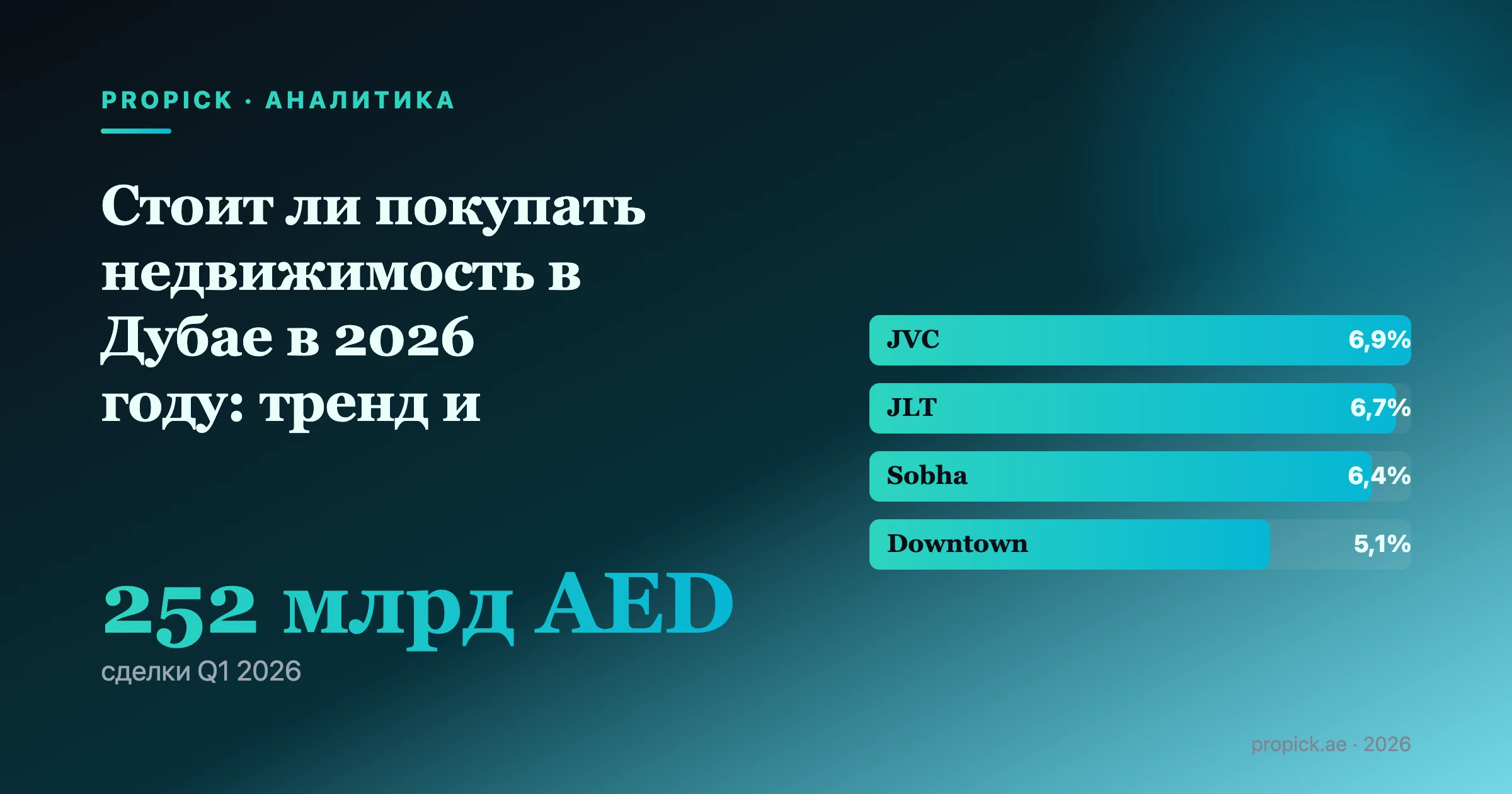
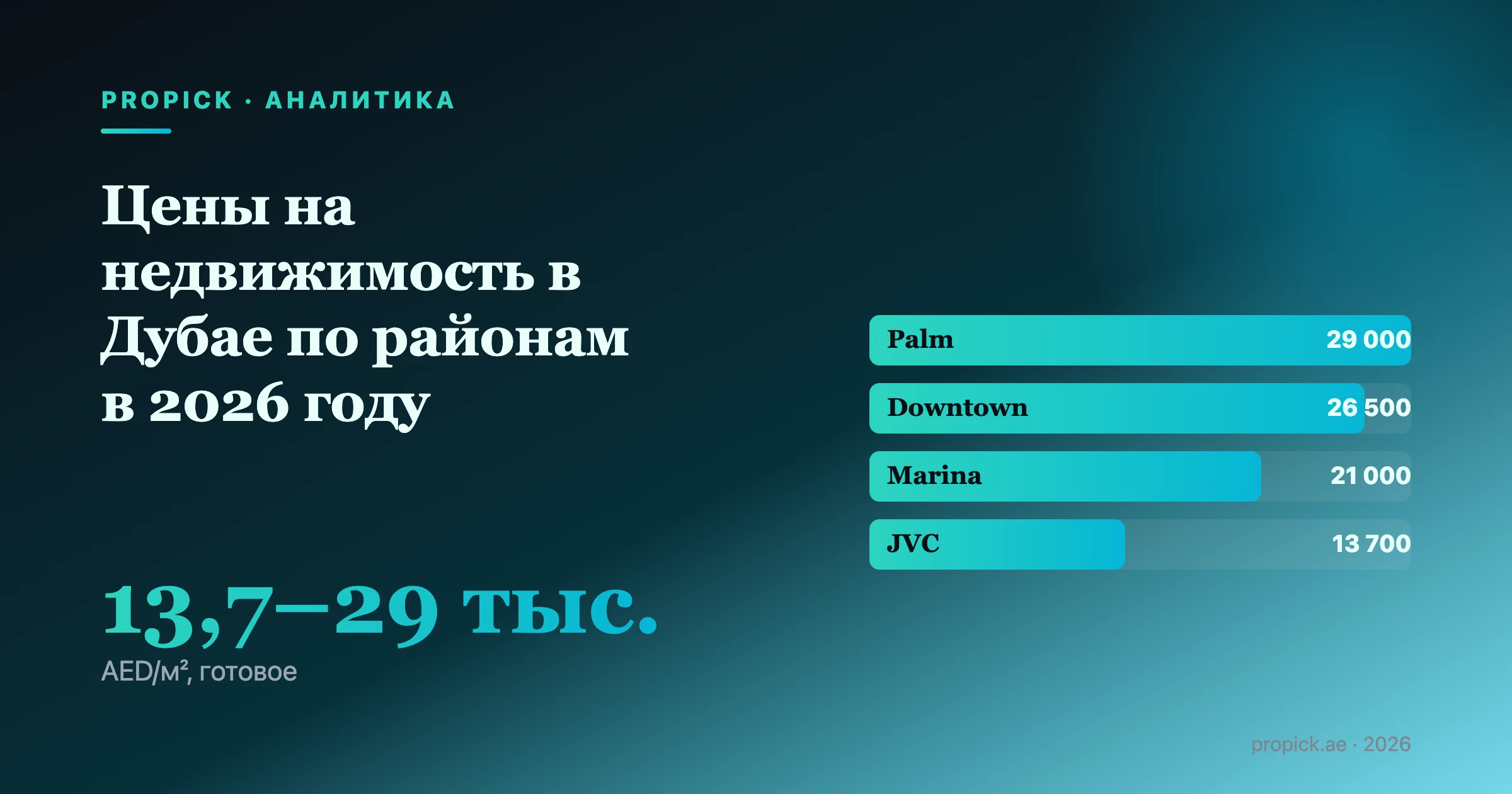
Dubai publishes granular transaction data. Per Dubai Land Department open data for 2026, prime districts trade at a median of AED 19,360 per square metre in Dubai Marina, AED 26,323 in Downtown Dubai and AED 28,702 on Palm Jumeirah (DLD Open Data). Gross rental yields run 5.4% to 6.3% in these prime areas and 7% to 9% in more affordable districts, all sourced directly to DLD data.
Bangkok is harder to state precisely on the same basis, because Thailand does not publish a Dubai-equivalent open registry of per-square-metre transaction prices or an official gross-yield series. Bangkok condominium prices and yields are widely discussed in market commentary, but no primary government source gives a single comparable figure, so this article does not quote a specific Bangkok price-per-square-metre or yield percentage rather than cite an unverifiable estimate. What can be said with confidence is structural: Bangkok's central condominium market is generally cheaper per square metre than Dubai's prime waterfront, and its gross yields are commonly described as sitting in the mid-single digits, below Dubai's affordable-segment range.
The Tax Comparison
Dubai is straightforward: a one-time Dubai Land Department registration fee of 4% of the sale value, paid in practice by the buyer, and after that no annual property tax, no capital gains tax, and no income tax on rental income (DLD, Property Sale Registration).
Thailand applies several charges at the point of transfer and on income, administered by the Land Department and the Revenue Department (Thai Revenue Department):
- A transfer fee of 2% of the government-appraised value, collected at the Land Office on registration.
- Either a Specific Business Tax of 3.3% (applied when the seller has held the property for less than five years) or stamp duty of 0.5% where the Specific Business Tax does not apply.
- A withholding tax on the sale, calculated on the appraised value on a progressive basis for individuals.
- Rental income is subject to Thai personal income tax on a progressive scale, with tax withheld at source in many cases.
So where Dubai charges one transaction fee and nothing thereafter, a Bangkok owner faces transfer-stage taxes plus recurring income tax on rent and tax again on eventual sale.
Dubai vs Bangkok at a Glance
| Factor | Dubai | Bangkok |
|---|---|---|
| Foreign land ownership | Yes, full freehold in designated zones | No, foreigners cannot own land |
| Foreign condo ownership | Full freehold, no quota | Yes, but capped at 49% of a building |
| Price transparency | DLD open per-sqm data | No official per-sqm registry |
| Gross rental yield | 5.4-6.3% prime, 7-9% affordable (DLD) | No official series; commonly mid-single digits |
| Transaction tax | 4% DLD fee, paid by buyer | 2% transfer fee + 3.3% SBT or 0.5% stamp duty + withholding |
| Annual property tax | None | Land and building tax applies |
| Capital gains tax | None | Taxed via withholding at sale |
| Tax on rental income | None | Progressive personal income tax |
Which Investor Each City Suits
Bangkok suits a buyer who specifically wants exposure to the Thai market and lifestyle, is comfortable owning a condominium unit within the foreign quota rather than land, and accepts the recurring and exit taxes that come with it. It is a lifestyle-and-market bet, not a structurally tax-efficient one.
Dubai suits an investor who prioritises security of title and after-tax return: full freehold ownership, transparent per-square-metre pricing to check against, higher documented yields, and no annual, capital-gains or rental-income tax. For a foreigner weighing ownership rights and net return above all else, Dubai's structure is difficult to match, and the ownership distinction, freehold versus a quota-limited condominium, is the first thing to weigh, not the last.
FAQ
Can a foreigner own property freehold in Bangkok?
Not land, and not a landed house. A foreigner can own a condominium unit, but only within a building where the total foreign ownership does not exceed 49% of the combined unit floor area, under Thailand's Condominium Act. Dubai, by contrast, allows full freehold ownership to foreigners in designated zones.
Is Dubai or Bangkok cheaper to buy in?
Bangkok's central condominium market is generally cheaper per square metre than Dubai's prime waterfront, but Thailand publishes no official per-square-metre registry comparable to Dubai Land Department data, so a precise like-for-like figure is not available from primary sources.
Which has the lower tax burden?
Dubai, clearly. It charges a single 4% registration fee and then no annual property tax, no capital gains tax and no tax on rental income. Thailand applies a transfer fee, specific business tax or stamp duty, a withholding tax at sale, an annual land and building tax, and income tax on rent.
What is the 49% condominium quota?
Under Thailand's Condominium Act, foreigners may own no more than 49% of the total unit floor area in any single condominium building. A buyer must confirm the specific building still has foreign quota available before purchasing.
Does the 4% Dubai fee get split between buyer and seller?
No. It is a single Dubai Land Department registration fee of 4% of the sale value, paid in practice by the buyer on the secondary market, not a 2%/2% split.
Sources
- Dubai Land Department, Property Sale Registration (4% fee, freehold registration): https://dubailand.gov.ae/en/eservices/property-sale-registration/
- Dubai Land Department, Open Data: Real Estate Data (prices and yields): https://dubailand.gov.ae/en/open-data/real-estate-data/
- Thailand Department of Lands (land and condominium registration, foreign ownership framework): https://www.dol.go.th/Pages/index.aspx
- Thai Revenue Department (taxes on property and income): https://www.rd.go.th/english/6045.html
Methodology. Dubai figures are medians from Dubai Land Department open transaction and rent data for 2026. Thailand's foreign-ownership rules are set by the Condominium Act and the Land Code, administered by the Department of Lands; tax rates are administered by the Revenue Department. This article deliberately does not quote a specific Bangkok price-per-square-metre or gross-yield percentage, because Thailand publishes no official registry comparable to DLD open data, and it flags that gap rather than filling it with an unverifiable estimate.