Hong Kong and Dubai are both held up as global gateway property markets, but the reputations attached to each are somewhat out of date. Hong Kong is still widely remembered as a market that piles punitive stamp duty on foreign buyers, when the government actually scrapped those extra duties in 2024. Dubai is often assumed to be cheaper purely because entry costs are simpler, when the real gap is driven as much by price level and yield as by tax. This piece works through both markets using Dubai Land Department (DLD) data and Hong Kong's Inland Revenue Department (IRD) and Rating and Valuation Department (RVD) as primary sources, ending with a worked, like-for-like example.
Price levels: Hong Kong still costs several times more per square metre
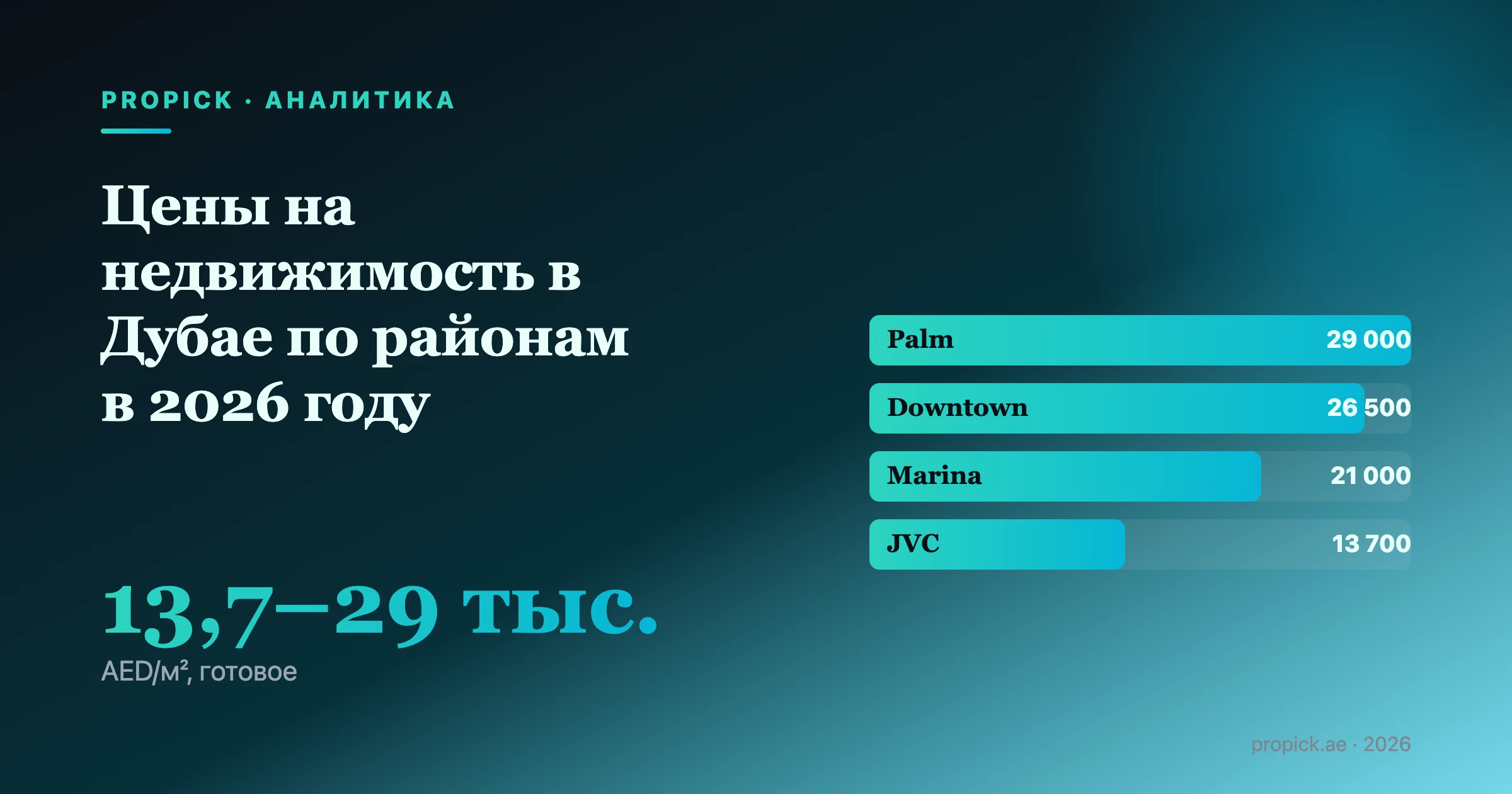
Dubai's prime apartment segment, per DLD Open Data, prices at AED 19,360/sqm in Dubai Marina, AED 26,323/sqm in Downtown Dubai, and AED 28,702/sqm on Palm Jumeirah (DLD Open Data). At the AED/USD peg of 3.6725, that is roughly USD 5,270, 7,168 and 7,815/sqm.
Hong Kong's Rating and Valuation Department publishes an actual average transaction price per square metre by unit size and district every month, which makes a direct comparison possible. For May 2026, the latest available figures, Hong Kong Island prices average HKD 148,954/sqm for units under 40 sqm (Class A), HKD 194,853/sqm for 70 to 99.9 sqm units (Class C), and HKD 237,321/sqm for units of 160 sqm or more (Class E) (RVD, Property Market Statistics, Private Domestic Average Prices by Class). Kowloon Class C sits at HKD 169,563/sqm, and even the New Territories, Hong Kong's least central region, prices Class A units at HKD 126,515/sqm. At roughly HKD 7.80 to the US dollar, those convert to about USD 19,100, 24,980 and 30,430/sqm for Hong Kong Island's three classes, USD 21,740/sqm for Kowloon Class C, and USD 16,220/sqm for New Territories Class A.
The gap is stark. Even Hong Kong's cheapest class-and-district combination, small New Territories units, prices around three times Dubai's most expensive district, Palm Jumeirah. Hong Kong Island's large luxury flats price at nearly six times Dubai Marina and close to four times Downtown and Palm Jumeirah.
Rental yield: Dubai wins by a wide margin at every price point
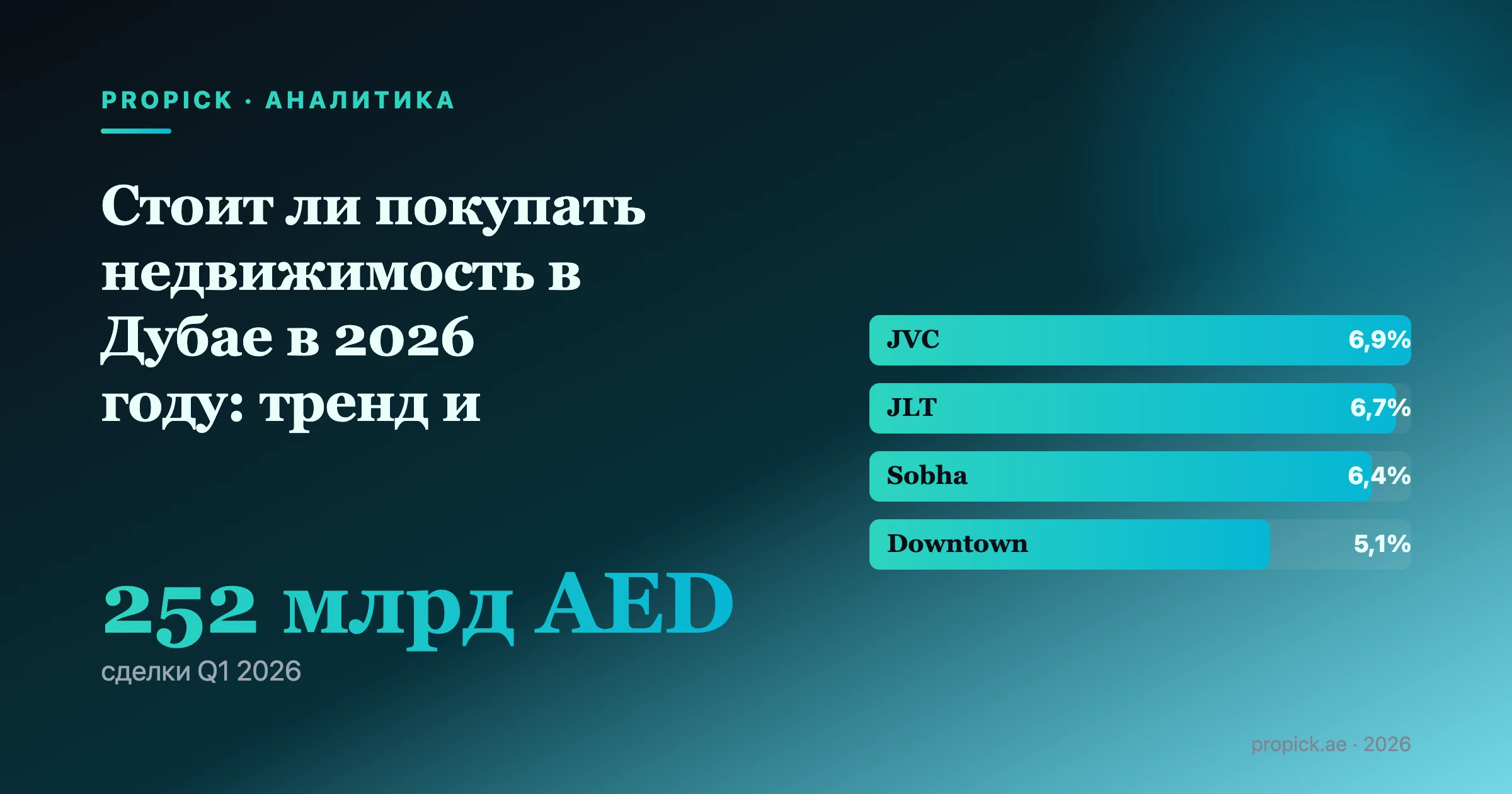
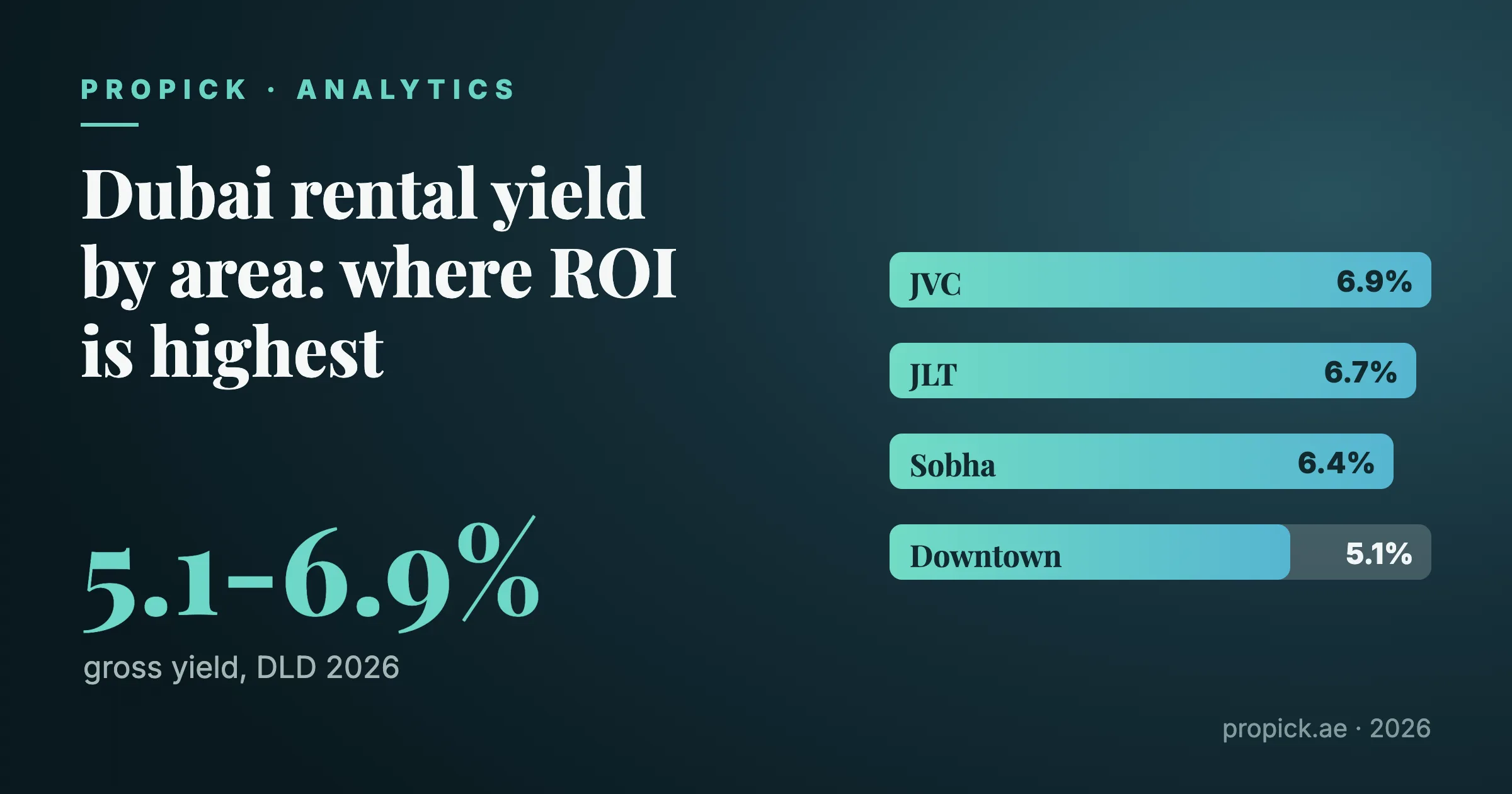
Dubai's gross rental yields, per DLD-linked market data, run 5.4 to 6.3 percent in prime areas like Downtown and the Marina, and 7 to 9 percent in more affordable, high-demand communities.
Hong Kong's RVD also publishes territory-wide gross rental yields by the same five unit-size classes. As of May 2026 (provisional), yields run from 3.4 percent for Class A, the smallest units, down to 2.9 percent for Class B, 2.7 percent for Class C, 2.6 percent for Class D, and 2.3 percent for Class E, the largest units (RVD, Property Market Statistics, Private Property Market Yields). Dubai's prime yields alone (5.4 to 6.3 percent) already exceed Hong Kong's best-yielding class, and Dubai's affordable-segment yields (7 to 9 percent) run roughly three to four times Hong Kong's typical 2.3 to 3.4 percent, before Hong Kong's 15 percent tax on rental income is even applied.
Entry costs: Hong Kong's 2024 reform changed the math, but prices still dominate
This is where the popular narrative is most out of date. For over a decade Hong Kong layered a Buyer's Stamp Duty (BSD) of up to 15 percent on non-permanent-resident and corporate buyers, plus a Special Stamp Duty (SSD) of up to 20 percent on resale within three years, on top of ordinary Ad Valorem Stamp Duty (AVD). The 2024-25 Budget cancelled both BSD and SSD entirely, effective 28 February 2024, and folded the AVD rate down to the lower Scale 2 schedule for all residential transactions, regardless of the buyer's residency or how many properties they already own (IRD, Demand-side Management Measures for Residential Properties).
What remains is a single, progressive AVD schedule that, since an amendment gazetted 29 May 2026, runs from a nominal HKD 100 up to HKD 4,000,000 (about USD 513,000), rises through several bands to a flat 4.25 percent between roughly HKD 21.7 million and 100 million (about USD 2.79 million to 12.82 million), then jumps to 6.5 percent above HKD 100 million, up from 4.25 percent before (Rates of Stamp Duty, GovHK). Result: for the large majority of transactions, up to roughly USD 2.79 million, Hong Kong's AVD sits at or below Dubai's flat 4 percent, exceeding it only on ultra-prime deals above that threshold.
Dubai's side has not changed: the only purchase cost is the DLD registration fee of 4 percent of sale value, paid in practice by the buyer, with no surcharge for foreign nationality, corporate ownership, or number of properties owned (Dubai Land Department, Property Sale Registration).
Ongoing costs: Hong Kong adds a recurring stack that Dubai simply does not have
Entry cost is only part of the picture; this is where Hong Kong's ongoing tax burden shows up, none of which has a Dubai equivalent.
- Property Tax on rental income: a standard rate of 15 percent on Net Assessable Value (NAV), where NAV is rent received (less any rates paid by the owner) minus a flat 20 percent statutory allowance for repairs and outgoings; no deduction for actual expenses, mortgage interest, or management fees unless the owner elects Personal Assessment (IRD, A Guide to Property Tax (1)). Dubai levies no income tax on rental income at all.
- Capital gains: no general capital gains tax; gains from selling a capital asset sit outside the scope of Profits Tax. But if a sale is part of "a scheme of profit-making", the IRD taxes the gain as ordinary business profit instead (IRD, Profits Tax, Scope of the Charge). Dubai has no capital gains tax under any circumstance.
- Government Rates: a recurring quarterly charge on rateable value (estimated annual market rent). Since 1 January 2025, rates run at 5 percent for roughly 98 percent of homes (rateable value HKD 550,000 or below), rising to 8 percent on the next HKD 250,000 and 12 percent on the remainder (RVD, Progressive Rating System for Domestic Tenements). Dubai has no annual property tax.
- Government Rent: most leases also carry a separate Government Rent of 3 percent of rateable value, payable annually under the Government Rent Ordinance (RVD, Government Rent FAQ). Dubai has no equivalent.
Dubai vs Hong Kong at a glance
| Metric | Dubai | Hong Kong |
|---|---|---|
| Prime price level | AED 19,360 to 28,702/sqm (~USD 5,270 to 7,815/sqm), Marina to Palm Jumeirah | HKD 126,515 to 237,321/sqm (~USD 16,220 to 30,430/sqm) across districts and unit classes, RVD, May 2026 |
| Gross rental yield | 5.4 to 6.3% prime; 7 to 9% affordable | 2.3 to 3.4% by unit-size class, territory-wide, RVD, May 2026 |
| Purchase/transfer tax | DLD fee: 4% of sale value, paid in practice by the buyer | Ad Valorem Stamp Duty: near-nil up to ~USD 513,000, progressive to 4.25% (~USD 2.79m to 12.82m), then 6.5% above ~USD 12.82m |
| Extra duty for foreign or repeat buyers | None | None since 28 Feb 2024 (Buyer's Stamp Duty and Special Stamp Duty abolished) |
| Annual property tax | None | Government Rates: 5% of rateable value (98% of homes), rising to 8%/12% above HKD 550,000/800,000 |
| Other recurring land charge | None | Government Rent: 3% of rateable value, most leases |
| Tax on rental income | None | Property Tax: 15% of Net Assessable Value |
| Capital gains tax | None, at any holding period | None on capital assets, but trading-pattern gains taxed as Profits Tax |
A worked example: a similar-size prime apartment in both cities
Take a 100 sqm apartment in Downtown Dubai against a comparable 90 sqm Class C flat on Hong Kong Island, both close to a typical family unit for their market.
The Downtown Dubai unit prices at roughly AED 2,632,300, about USD 716,800. The 4 percent DLD fee comes to about USD 28,660. At Dubai's prime yield range of 5.4 to 6.3 percent, it could rent for roughly USD 38,700 to 45,200 a year, with no ongoing property tax, rental income tax, or capital gains tax.
The Hong Kong Island Class C unit, at HKD 194,853/sqm, prices at roughly HKD 17,540,000, about USD 2,248,300, more than three times the Dubai unit's price for a smaller floor area. This falls in the flat 3.75 percent AVD band, so stamp duty is about USD 84,300, well above Dubai's fee in dollar terms even though the rate itself is below 4 percent. Applying Hong Kong's territory-wide Class C yield of 2.7 percent gives estimated annual rent of about USD 60,700. After the 20 percent statutory allowance, Property Tax at 15 percent of NAV adds roughly USD 7,280 a year; Government Rates add about USD 3,040 at 5 percent; Government Rent adds about USD 1,820 at 3 percent. Together, Hong Kong's recurring taxes alone run to roughly USD 12,140 every year Dubai does not charge, on top of an entry cost more than double Dubai's fee.
FAQ
Does Hong Kong still charge extra stamp duty to foreign property buyers in 2026? No. The Buyer's Stamp Duty and Special Stamp Duty that once added up to 30 percent or more for non-resident and short-hold buyers were both abolished for instruments executed on or after 28 February 2024. Only the ordinary, progressive Ad Valorem Stamp Duty applies today, regardless of the buyer's nationality or number of properties owned (IRD, Demand-side Management Measures).
Is Hong Kong's stamp duty now higher or lower than Dubai's flat 4 percent fee? It depends on the price bracket. Up to roughly USD 2.79 million, Hong Kong's Ad Valorem Stamp Duty schedule sits at or below 4 percent, and on properties under about USD 513,000 it is close to nil. Above roughly USD 2.79 million it reaches 4.25 percent, and above about USD 12.82 million it rises to 6.5 percent following a May 2026 amendment (GovHK, Rates of Stamp Duty). Dubai's 4 percent DLD fee is flat at every price level (DLD, Property Sale Registration).
Why are Hong Kong's rental yields so much lower than Dubai's? Prices have risen far faster than rents over time, so the ratio of annual rent to capital value has compressed. RVD data shows this holding across every unit-size class, from 3.4 percent on the smallest units down to 2.3 percent on the largest, well below Dubai's 5.4 to 9 percent range, and that is before Hong Kong's 15 percent Property Tax on rental income is applied.
Are there ongoing property taxes in Hong Kong that Dubai does not have? Yes, three separate recurring charges: a 15 percent Property Tax on rental income, Government Rates of 5 to 12 percent of rateable value depending on the property's value band, and a Government Rent of 3 percent of rateable value on most leases. Dubai has no annual property tax, no rental income tax, and no equivalent land rent (RVD, Progressive Rating System; RVD, Government Rent; IRD, Property Tax Guide).
Is there a capital gains tax in either city? Neither city has a capital gains tax in the conventional sense. Dubai has none under any circumstance. Hong Kong has none on the sale of a capital asset, but if the Inland Revenue Department finds a transaction bears the badges of a trading business, such as frequent buying and selling, the gain is taxed as ordinary Profits Tax income instead (IRD, Profits Tax, Scope of the Charge).
Sources
- Dubai Land Department, Property Sale Registration
- Dubai Land Department, Open Data: Real Estate Data
- GovHK, Rates of Stamp Duty
- IRD, Demand-side Management Measures for Residential Properties (FAQ)
- IRD, A Guide to Property Tax (1)
- IRD, Profits Tax, Scope of the Charge
- RVD, Progressive Rating System for Domestic Tenements
- RVD, Government Rent (FAQ)
- RVD, Property Market Statistics (Average Prices by Class; Market Yields)