Dubai and Istanbul are the two cities global property investors compare most often, and for good reason. Both sell more than square meters: both sell a legal status. Buy the right property in Dubai and you get a renewable ten-year residence permit. Buy the right property in Turkey and you get, within a few months, an actual second passport. That single difference reshapes almost everything else in this comparison, from entry price to tax exposure to currency risk. This article lays the two markets side by side, using Dubai Land Department (DLD) data on one side and Turkish government and central bank data on the other, and does not pretend the two products are interchangeable.
Two very different paths to a second status
Dubai's route is residency, not citizenship. A property purchase of AED 2,000,000 or more qualifies a buyer for the UAE Golden Visa, a renewable long-term residence permit, under the terms published by Dubai Land Department (DLD, property sale registration eServices). At the dirham's fixed peg of 3.6725 to the US dollar, that threshold works out to roughly USD 544,600.
Turkey's route is citizenship. Foreigners who acquire property worth at least USD 400,000, and agree to a title deed restriction preventing resale for three years, can apply for Turkish citizenship, according to the Presidency of the Republic of Turkiye Investment Office (invest.gov.tr, Acquiring Property and Citizenship). That is a lower dollar entry point than Dubai's Golden Visa, and it buys a fundamentally stronger legal outcome: full citizenship and a Turkish passport rather than a renewable residence card. Investors should not confuse the two. A UAE Golden Visa can be revoked if the qualifying condition lapses and does not lead to citizenship on its own. Turkish citizenship by investment, once granted, is citizenship, with all the travel, tax residency and inheritance implications that carries.
Prices: a premium market against an inflating one
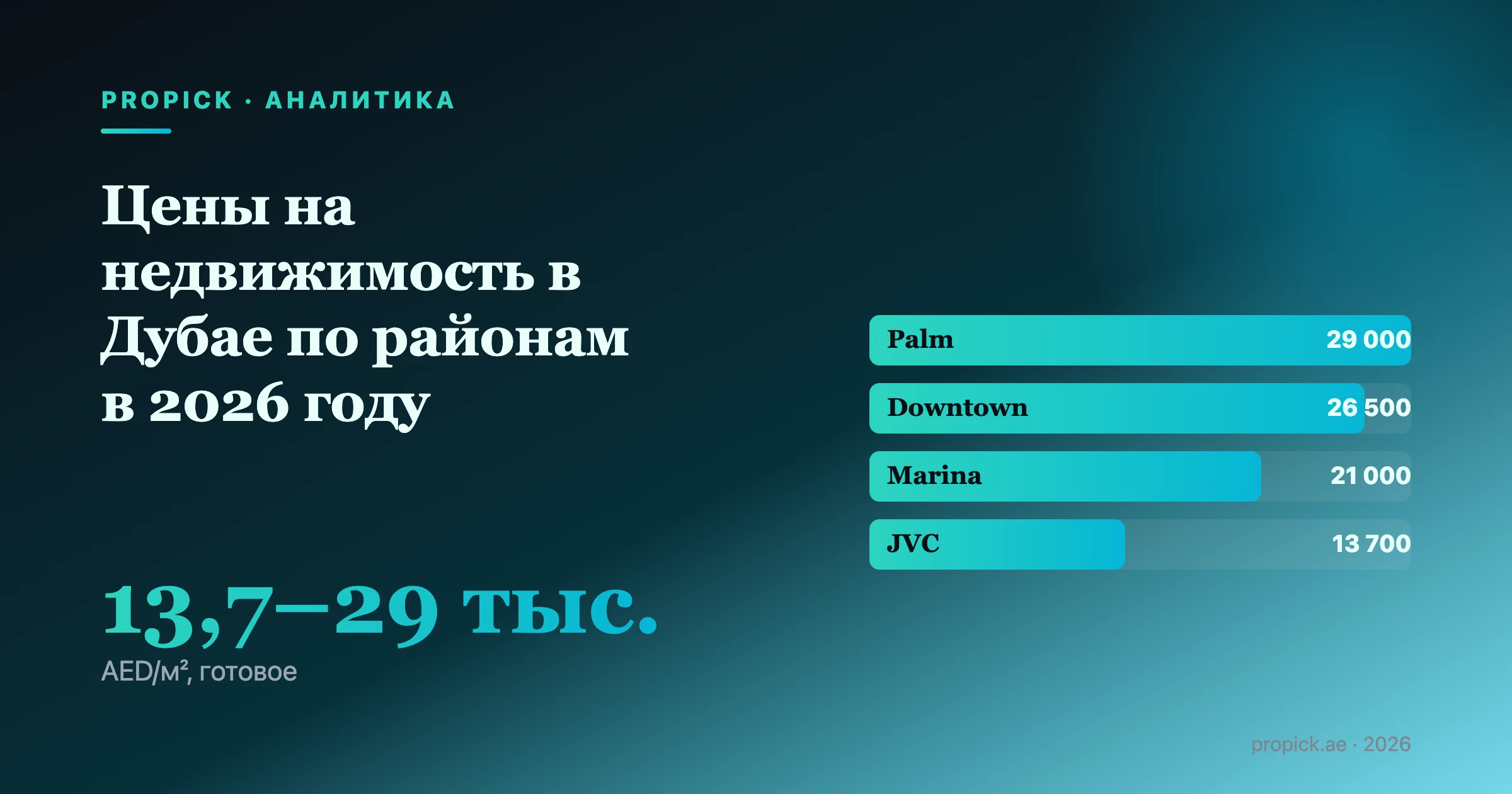
Dubai's prime districts trade at levels that reflect over a decade of steady, dollar-denominated appreciation. Dubai Land Department's open data puts Dubai Marina at AED 19,360 per square meter, Downtown Dubai at AED 26,323 per square meter, and Palm Jumeirah at AED 28,702 per square meter (DLD Open Data, real estate data portal). In dollar terms, at the fixed peg, that is roughly USD 5,270, USD 7,170 and USD 7,815 per square meter respectively, and those dollar figures do not move unless DLD prices themselves move.
Istanbul does not publish an official absolute price-per-square-meter series comparable to DLD's open data. What Turkey's central bank does publish is a quality-adjusted price index, and it tells an unusually direct story about what a lira-denominated asset is actually worth. The Residential Property Price Index (RPPI) for Istanbul stood at 216.9 in June 2026 (base year 2023 equals 100), up 25.3% year on year in nominal lira terms (TCMB, Residential Property Price Index and New Tenant Rent Index, June 2026). Nationally, the same report shows Turkiye's RPPI up 24.5% nominal but down 5.8% once adjusted for inflation. In other words, a Turkish property owner who watched their home's lira price rise by a quarter over the past year still lost real purchasing power on that asset. Dubai buyers, working in a currency pegged one-for-one to the dollar since 1997, do not face that particular arithmetic.
Yield: a tighter Dubai spread against an unmeasured Istanbul market
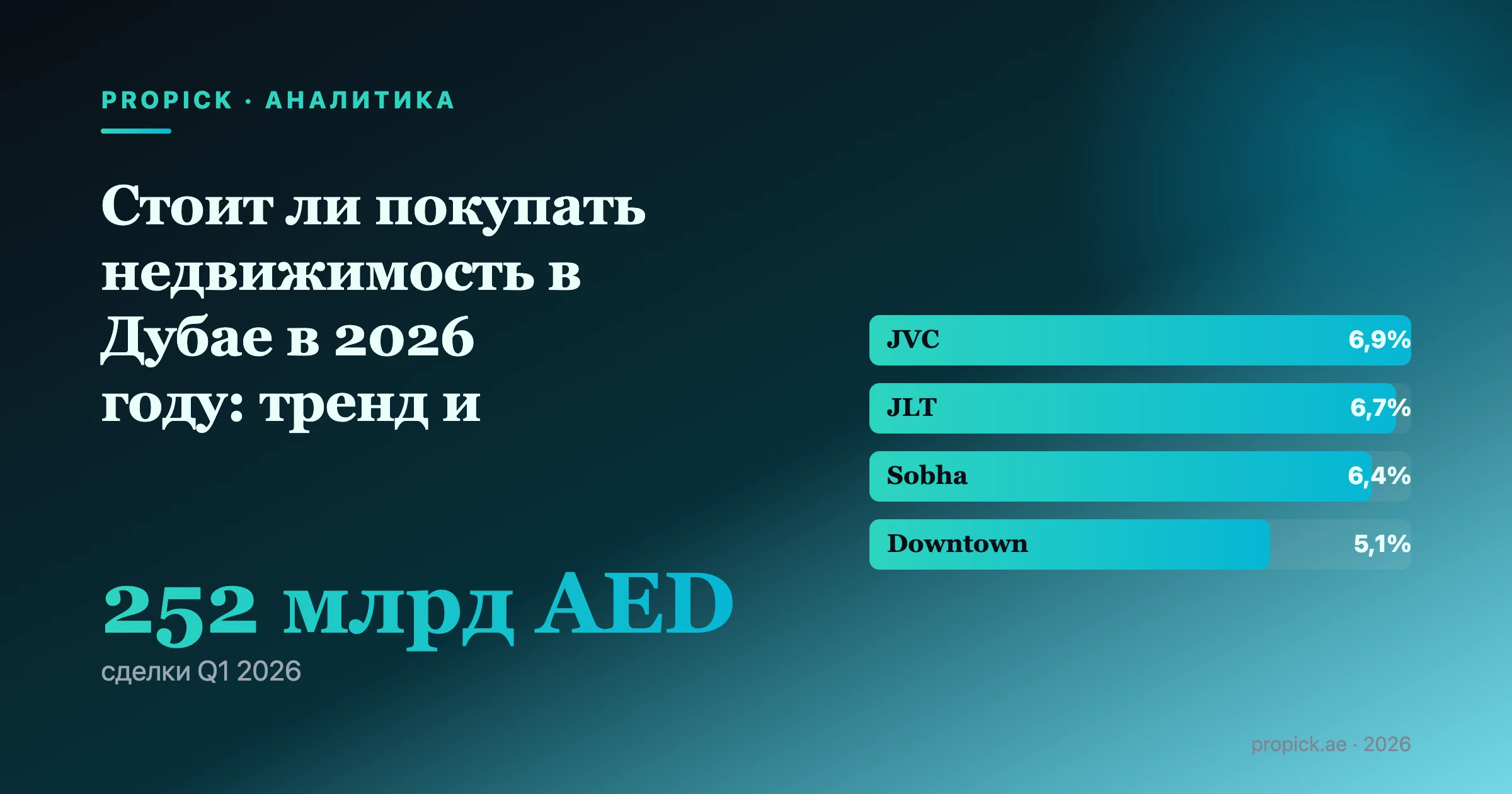
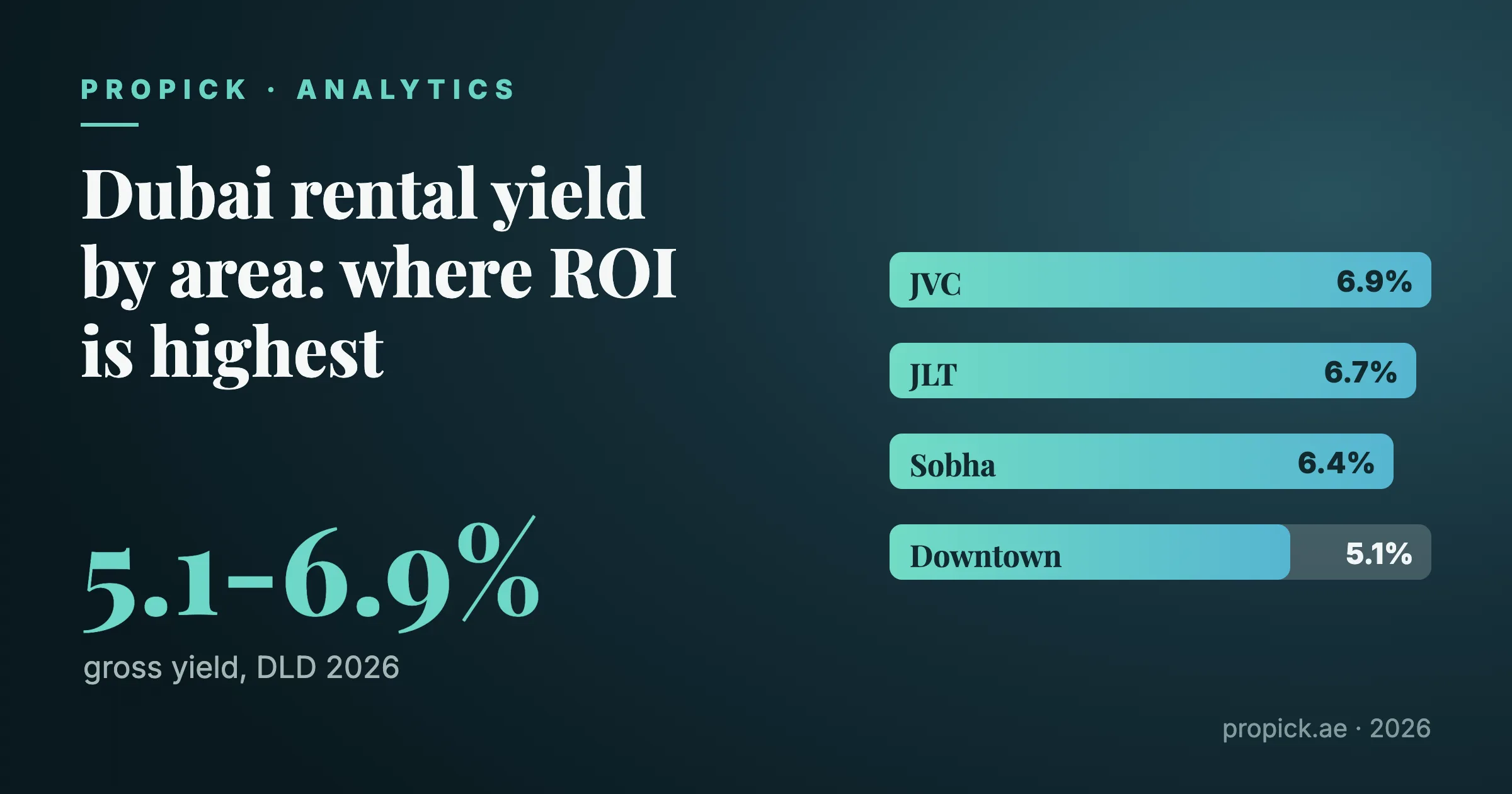
Dubai's yield picture is well documented through DLD-linked data: prime districts run 5.4% to 6.3% gross, while more affordable, high-turnover communities reach 7% to 9% gross. Turkey has no equivalent official yield series, so any specific percentage quoted for Istanbul should be treated with caution. What the central bank's own numbers do show is that Istanbul rents are currently rising faster than Istanbul sale prices in nominal terms: the New Tenant Rent Index for Istanbul rose 33.4% year on year in June 2026, against the 25.3% rise in the sale price index over the same period (TCMB, same release). That dynamic supports gross rental yields on paper, but a lira landlord still has to convert that rental income back into a hard currency to preserve its value, and the exchange rate has not stood still.
Taxes: zero versus layered
Dubai's tax position is simple and, for global comparison purposes, close to unique. There is no annual property tax, no capital gains tax and no income tax on rental income. The only transaction cost is the DLD registration fee of 4% of the sale value, paid in practice by the buyer (DLD, property sale registration eServices).
Turkey layers three separate taxes onto property ownership. First, a one-time title deed transfer fee (tapu harci) applies at the point of sale: current law sets this at 2% of the declared transfer value for the seller and 2% for the buyer, a combined 4%, under Turkey's Fees Law (Harclar Kanunu, Law No. 492, Tariff 4) as published in the official legislation database (mevzuat.gov.tr, Law No. 492 and its schedules). In practice the two sides frequently negotiate who actually pays, but the legal split is even. Second, an annual property tax (emlak vergisi) applies every year at 0.1% to 0.6% of the assessed municipal value, according to Turkey's official investment promotion agency (invest.gov.tr, Tax Guide). Third, net rental income is taxed as ordinary personal income, under Turkey's progressive brackets running from 15% up to 40%, per the same official guide. None of these three costs exist for a Dubai property owner.
Currency: a fixed peg against a fast-moving float
This is where the two markets diverge most sharply for a foreign buyer thinking in dollars. The UAE dirham has been pegged at 3.6725 to the US dollar since 1997, and Dubai property values quoted in AED translate into dollars at a fixed, predictable rate. The Turkish lira floats, and it has not been kind to holders of lira-denominated assets. Turkey's own Official Gazette set the government reference rate for the lira at 43.05 per US dollar effective 1 January 2026, for the specific purpose of calculating consular fee equivalents (Turkish Official Gazette communique referenced in Harclar Kanunu, Law No. 492). By 24 July 2026, the Central Bank of the Republic of Turkiye's own daily rate bulletin put the dollar selling rate at 47.2497 lira (TCMB, daily buying and selling rates, Bulletin No. 2026/136). That is a depreciation of roughly 9.8% against the dollar in under seven months, on the government's own numbers. A Turkish property that gained 25% in lira terms over a year in which the lira lost close to 10% of its dollar value is a materially different investment once translated back into the currency most foreign buyers actually think in.
Head-to-head comparison
| Factor | Dubai | Istanbul / Turkey |
|---|---|---|
| Path to status | Golden Visa residence at AED 2,000,000 (~USD 544,600) | Citizenship at USD 400,000, 3-year resale lock |
| Currency | AED pegged at 3.6725 to USD since 1997 | Free-floating lira; USD/TRY about 47.25 (24 Jul 2026) |
| One-time transfer cost | DLD fee 4%, paid in practice by buyer | Tapu harci 4% total, split 2% buyer / 2% seller |
| Annual property tax | None | Emlak vergisi, 0.1% to 0.6% of assessed value |
| Tax on rental income | None | Progressive income tax, 15% to 40% |
| Capital gains tax | None | Not covered by the sources cited in this article |
| 2026 price trend | Marina AED 19,360/sqm; Downtown AED 26,323/sqm; Palm AED 28,702/sqm | RPPI Istanbul +25.3% nominal annual; Turkiye average -5.8% real annual |
| Gross rental yield | 5.4% to 6.3% prime; 7% to 9% affordable | No official yield series; rents (NTRI) rising faster than prices |
So which city wins?
Neither, outright, because they are not selling the same product. Turkey is the cheaper door and the stronger legal outcome: a USD 400,000 threshold that buys an actual passport, in a market where central bank data shows rents currently outpacing sale prices in nominal terms. Dubai is the more expensive door and the more limited legal outcome: a higher dollar threshold that buys renewable residence, not citizenship, in a market with no annual tax, no capital gains tax, no rental income tax and a currency that cannot devalue against the dollar by policy design.
For an investor purely optimizing for legal status per dollar spent, Turkey's citizenship route is hard to beat on price. For an investor optimizing for after-tax, currency-stable total return, Dubai's zero-tax structure and hard peg remove two entire categories of risk that a Turkish lira asset carries by default, even before considering the country's higher headline transaction and holding taxes. The right answer depends on whether the buyer values a passport more than predictable purchasing power, and the two are genuinely not the same question.
FAQ
Is Turkey's USD 400,000 threshold cheaper than Dubai's Golden Visa in dollar terms? Yes. Turkey's citizenship-by-investment threshold is USD 400,000 (invest.gov.tr), while Dubai's AED 2,000,000 Golden Visa threshold converts to roughly USD 544,600 at the fixed peg of 3.6725 (DLD). Turkey's entry point is lower, but it buys citizenship, not residence.
Does Dubai have an annual property tax like Turkey's emlak vergisi? No. Dubai has no annual property tax, no capital gains tax and no income tax on rental income. The only cost at the point of sale is the DLD registration fee of 4%, paid in practice by the buyer (DLD). Turkey's emlak vergisi runs 0.1% to 0.6% of assessed value every year, on top of the initial transfer fee (invest.gov.tr).
How real is lira currency risk for a foreign property buyer in Istanbul? It is measurable and current. Turkey's own official reference rate for the lira moved from 43.05 to the dollar on 1 January 2026 to 47.2497 by 24 July 2026, a depreciation of about 9.8% in under seven months, according to the Central Bank of the Republic of Turkiye's daily rate bulletin (TCMB). Over the same broad period, national property prices rose 24.5% in nominal lira terms but fell 5.8% in real, inflation-adjusted terms (TCMB RPPI report).
Who actually pays the transfer tax in each market? In Dubai, the DLD fee is 4% of the sale value and is paid in practice by the buyer (DLD). In Turkey, the tapu harci is legally split 2% to the seller and 2% to the buyer under the Fees Law (Law No. 492), though in practice the parties can and do negotiate who covers which share (mevzuat.gov.tr).
Which market offers better rental yields right now? Dubai publishes a clear, DLD-linked yield range of 5.4% to 6.3% gross in prime districts and 7% to 9% in more affordable communities. Turkey has no comparable official yield series, but its central bank data shows Istanbul rents (New Tenant Rent Index, +33.4% annually) currently rising faster than Istanbul sale prices (+25.3% annually) in nominal terms, which supports yields even as the lira's real depreciation weighs on the same owner's overall return (TCMB).
Sources
- Dubai Land Department, property sale registration eServices (4% fee)
- Dubai Land Department, Real Estate Open Data portal
- Presidency of the Republic of Turkiye Investment Office, Acquiring Property and Citizenship
- Presidency of the Republic of Turkiye Investment Office, Tax Guide
- Turkish Fees Law (Harclar Kanunu), Law No. 492, official text and schedules, mevzuat.gov.tr
- Central Bank of the Republic of Turkiye, Residential Property Price Index and New Tenant Rent Index, June 2026
- Central Bank of the Republic of Turkiye, daily foreign exchange rate bulletin