For a Russian investor deciding where to place capital in residential property, Dubai and Moscow are not just two cities with different price tags; they sit on opposite sides of a currency and tax regime that changes the entire arithmetic of ownership. Moscow is priced in roubles, taxed under a Russian legal system the investor already knows, and increasingly shaped by a central bank fighting inflation with a high policy rate. Dubai is priced in dirhams pegged to the US dollar, carries a single flat transaction fee, and levies no ongoing property, rental or capital gains tax at all. This piece compares the two markets on price and yield, on the full tax stack, and on the currency mechanics behind each, using Dubai Land Department (DLD) data on one side and Russia's Federal Tax Service (FNS) and Bank of Russia (CBR) on the other, so the comparison rests on documented rules rather than sentiment.
Price and yield: what the numbers show
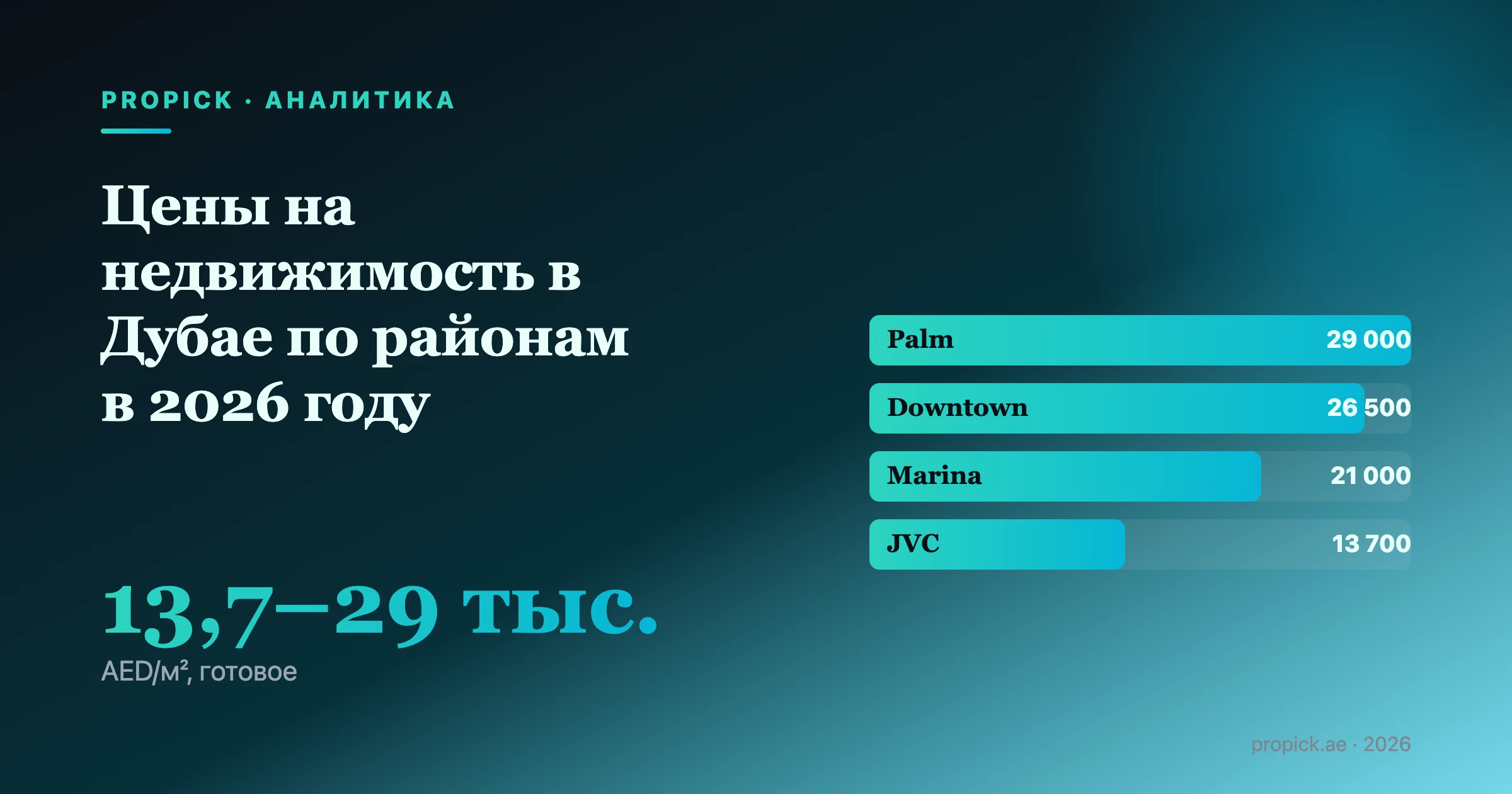
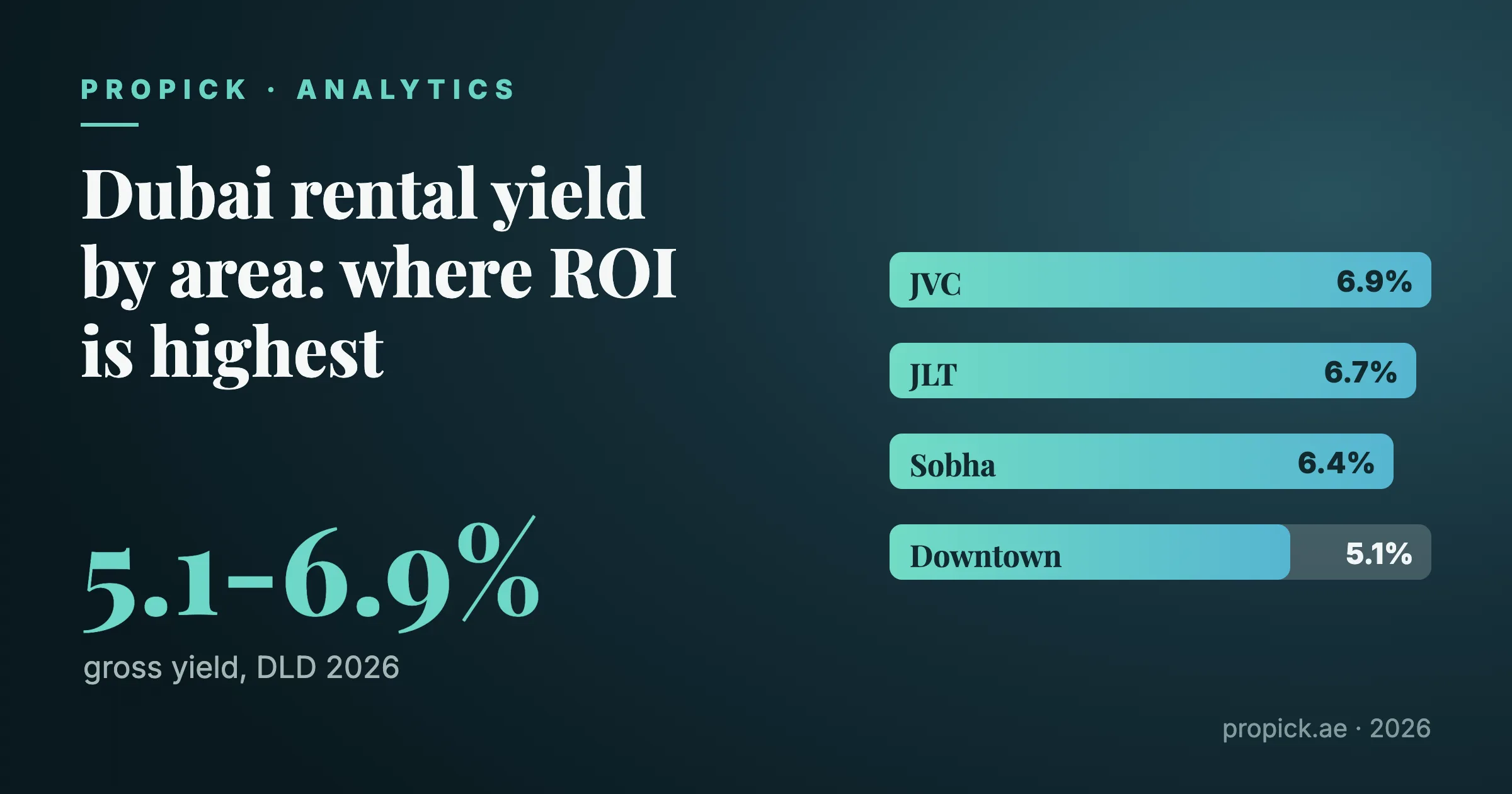
Dubai's prime apartment segment, per DLD Open Data, currently prices at AED 19,360 per sqm in Dubai Marina, AED 26,323 per sqm in Downtown Dubai, and AED 28,702 per sqm on Palm Jumeirah (DLD Open Data). At the AED/USD peg of 3.6725, that converts to roughly USD 5,270, USD 7,168 and USD 7,815 per sqm respectively, a conversion that stays pure arithmetic for as long as the peg holds. Gross rental yields in Dubai run 5.4 to 6.3 percent in these prime communities and 7 to 9 percent in more affordable, high-demand areas.
No single official average price per square metre for Moscow residential property was verified against a primary source for this article, so no absolute Moscow price figure is quoted here. What can be sourced directly is the financing backdrop: the Bank of Russia's key policy rate stood at 14.00 percent as of late July 2026, with annual inflation at 6.0 percent against the CBR's own 4.0 percent target (Bank of Russia, key data). A policy rate at that level makes mortgage-financed purchases considerably more expensive in Russia than in a market with single-digit borrowing costs, which compresses the net return available to a leveraged Moscow buyer even before rent and tax are counted. Gross rental yields in Moscow are commonly cited in Russian market commentary in the mid-single-digit range, generally below Dubai's prime yields and well below its affordable-segment yields.
Taxes: a flat 4% versus a layered system
Dubai charges no annual property tax, no capital gains tax, and no personal income tax on rental income. The only cost tied to a purchase is the DLD registration fee of 4 percent of the sale value, paid in practice by the buyer at the point of transfer (Dubai Land Department, property sale registration). The UAE also levies no personal income tax more broadly (UAE Government Portal, Taxation).
Russia's system is layered into three separate charges instead of one:
- Annual property tax (налог на имущество физических лиц): a cadastral-value-based tax under Chapter 32 of the Tax Code. Article 406 sets a base rate of 0.1 percent of an apartment's or house's cadastral value, which a municipality (Moscow included) may adjust within a 0 to 0.3 percent band for higher-value homes, rising to a mandatory 2 percent for property with a cadastral value above 300 million roubles. Current local rates and any exemptions can be checked directly on the Federal Tax Service's property tax page (FNS, property tax for individuals).
- NDFL on rental income: rental income (доход от сдачи имущества в аренду) is subject to personal income tax (NDFL), confirmed as taxable income under FNS's own guidance (FNS, NDFL rates and rules). For a Russian tax resident, the rate is 13 percent as long as the resident's aggregate annual income across salary, rental and similar sources is at or below 2.4 million roubles. A progressive scale introduced in 2025 applies above that threshold: 15 percent on the portion of aggregate income between 2.4 and 5 million roubles, 18 percent between 5 and 20 million, 20 percent between 20 and 50 million, and 22 percent above 50 million (FNS, NDFL rates and rules).
- Capital gains on sale: governed by the Tax Code's minimum-ownership-period rule (Article 217.1). FNS's own guidance confirms the mechanism directly: income from selling property held for less than the minimum period is taxable, while income from selling property held beyond it is not (FNS, NDFL rates and rules). The general minimum period is five years; a three-year period applies to a narrower set of cases, such as a taxpayer's only residential property, property received by inheritance, property received as a gift from a close family member, or privatised property. Sell before the applicable period and the gain is taxed as ordinary income under NDFL; hold beyond it and the sale is exempt.
Currency and stability: a pegged dirham versus a floating rouble
Since November 1997, the UAE dirham has been pegged to the US dollar at a fixed rate of 3.6725 dirhams per dollar, a rate maintained by the Central Bank of the UAE (Central Bank of the UAE). Converted at that peg, Dubai property behaves like a dollar-denominated asset: its USD value does not move because of a UAE-side currency event, only because the AED price itself changes.
The rouble works on a different mechanism entirely. Russia runs a floating exchange rate under an inflation-targeting regime managed by the Bank of Russia. As of 25 July 2026, the CBR's own official rate put the dollar at 78.0308 roubles, itself down from 78.4049 roubles the previous trading day, a day-to-day move that a fixed peg simply does not produce (Bank of Russia, key data). The same source shows the CBR's key policy rate at 14.00 percent and annual inflation at 6.0 percent against a 4.0 percent target, both signs of a central bank actively managing price and currency conditions rather than resting on a fixed anchor.
For a Russian investor, the practical difference is this: a Moscow property's value in hard-currency terms can move because of an exchange-rate shift alone, independent of anything happening to the underlying rouble price of the flat itself. A Dubai property's dollar value, once converted at the peg, does not carry that additional layer of currency risk, though the AED price can still rise or fall on its own market terms. Neither structure removes risk; they distribute it differently, and the dirham's decades-long peg is a structurally different arrangement from a currency that reprices daily against the dollar.
Dubai vs Moscow at a glance
| Metric | Dubai (UAE) | Moscow (Russia) |
|---|---|---|
| Prime price level | AED 19,360 to 28,702/sqm (~USD 5,270 to 7,815/sqm), Marina to Palm Jumeirah | No verified absolute psm figure quoted; price growth relative to rent, and to a 14% key rate, is the driver of yield below |
| Gross rental yield | 5.4 to 6.3% prime; 7 to 9% affordable | Commonly cited in the mid-single-digit range, compressed by high mortgage rates |
| Purchase/transfer cost | DLD fee: 4% of sale value, paid in practice by the buyer | No equivalent flat federal transfer tax; notary, registration and agent costs apply separately |
| Annual property tax | None | Cadastral-value based, 0.1% base rate, up to 0.3% for higher-value homes, 2% above 300 million roubles cadastral value (Tax Code Art. 406) |
| Tax on rental income | None | NDFL 13% for residents up to 2.4 million roubles/year aggregate income; 15 to 22% progressive above that, since 2025 |
| Capital gains on sale | None, at any holding period | Exempt after the minimum ownership period (5 years generally, 3 years for specific exceptions); taxed as ordinary NDFL income if sold earlier |
| Currency regime | AED pegged to USD at 3.6725 since November 1997 | Rouble floats under CBR's inflation-targeting regime; key rate 14.00%, inflation 6.0% vs 4.0% target (July 2026) |
Which market fits which investor
An investor prioritising tax simplicity and currency stability will find Dubai's math easier to hold in one's head: a single 4 percent entry cost, no annual property tax, no tax on rental income, no capital gains tax at any holding period, and a currency that has held the same USD rate since 1997. An investor prioritising familiarity, an asset denominated in their own currency, and a legal and tax system already understood in detail, may still prefer Moscow, accepting in exchange an annual cadastral-value property tax, NDFL on rental income, a minimum-holding-period rule on any sale, and a currency that reprices against the dollar every trading day rather than holding a fixed rate. Neither market is objectively superior; the two carry genuinely different risk profiles, and the right fit depends on how an individual investor weighs running costs and currency mechanics against home-market familiarity.
FAQ
Is the dirham's peg to the US dollar likely to change? The peg has held at 3.6725 AED per USD since November 1997, maintained by the Central Bank of the UAE (Central Bank of the UAE). This article reports the peg as it currently stands; it does not predict future policy.
Does Dubai's 4% DLD fee cover every cost of buying? It covers the government registration fee on the transaction. Buyers should also budget for agency commission, a Dubai Land Department admin fee, and, if applicable, a mortgage registration fee, none of which are annual charges (Dubai Land Department, property sale registration).
How does Russia's progressive NDFL scale affect someone renting out a single Moscow apartment? For most individual landlords, total annual income including rent stays at or below 2.4 million roubles, so the 13 percent rate applies to the whole amount. The higher 15 to 22 percent tiers only bite on the portion of aggregate annual income above 2.4 million roubles (FNS, NDFL rates and rules).
What happens if I sell my Moscow property before the minimum ownership period? The gain is taxed as ordinary income under NDFL. Holding beyond the minimum period, five years generally, three years for cases such as a taxpayer's only home, an inheritance, a gift from a close family member, or privatised property, exempts the sale from this tax (FNS, NDFL rates and rules).
Is Moscow's annual property tax the same everywhere in Russia? No. Article 406 of the Tax Code sets a federal base rate and a federal ceiling, but the exact rate within that band, and any local exemptions, are set by each municipality, including Moscow, and can be checked on the Federal Tax Service's property tax page (FNS, property tax for individuals).
Sources
- Dubai Land Department, Property Sale Registration
- Dubai Land Department, Open Data: Real Estate Data
- UAE Government Portal, Taxation
- Central Bank of the UAE
- Federal Tax Service of Russia (FNS), NDFL rates and rules
- Federal Tax Service of Russia (FNS), property tax for individuals (apartments)
- Bank of Russia (CBR), key data (key rate, inflation, USD/RUB rate)