Dubai and Paris rarely sit in the same investment conversation, which is exactly why putting them side by side is useful. One is a young, fast-growing market built around a single flat fee and no ongoing taxation. The other is a mature, supply-constrained capital whose tax code adds a cost at nearly every stage of ownership: buying, holding, letting, and selling. Both can be defensible investments. The question this article answers is not which city is "better" in the abstract, but how much of the headline return actually survives the fee and tax stack before it reaches the owner.
The two regimes in one table
| Cost or rule | Dubai | Paris / France |
|---|---|---|
| Registration or transfer cost | 4% of sale value, paid in practice by the buyer (DLD) | Roughly 7-8% of price on an existing home: droits de mutation (about 5.8-6.3% depending on the department's rate) plus notary emoluments and formalities (notaires.fr) |
| Annual property tax | None | Taxe fonciere, based on the cadastral rental value, revalued each year with inflation; the base rose 1.7% in 2025 (impots.gouv.fr) |
| Wealth tax | None | IFI applies once an individual's net taxable real estate wealth exceeds EUR 1,300,000 (impots.gouv.fr) |
| Capital gains tax on sale | None | 19% income tax plus 17.2% social charges on the gain from a secondary residence; a principal residence is exempt; taper relief brings income tax to zero after 22 years of ownership and social charges to zero after 30 years (impots.gouv.fr) |
| Tax on rental income, non-resident owner | None | Progressive income tax scale plus 17.2% social levies on unfurnished lets (18.6% on furnished lets from 2025 income); EEA and Swiss residents can avoid CSG/CRDS but still owe a 7.5% solidarity levy (impots.gouv.fr) |
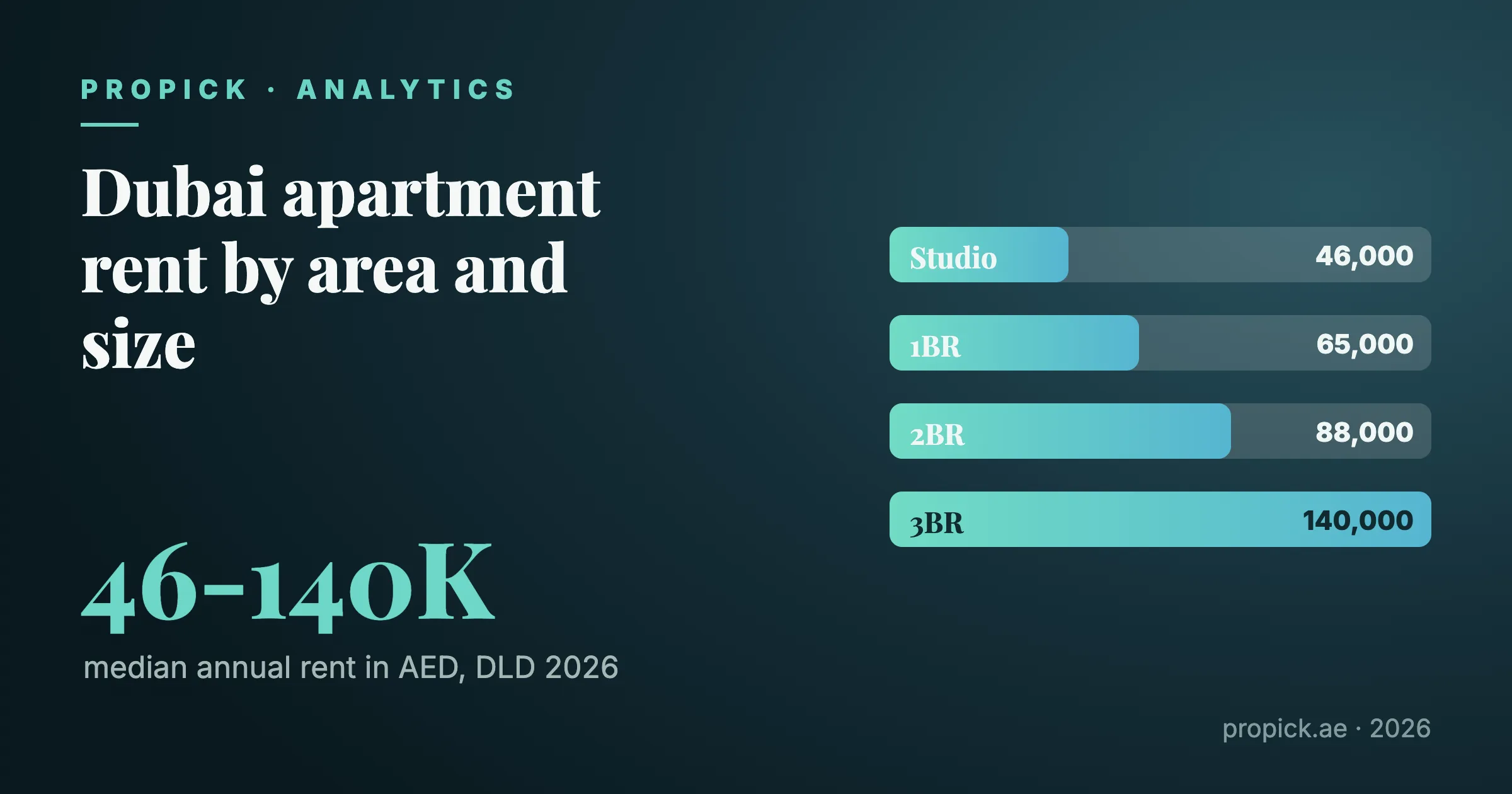
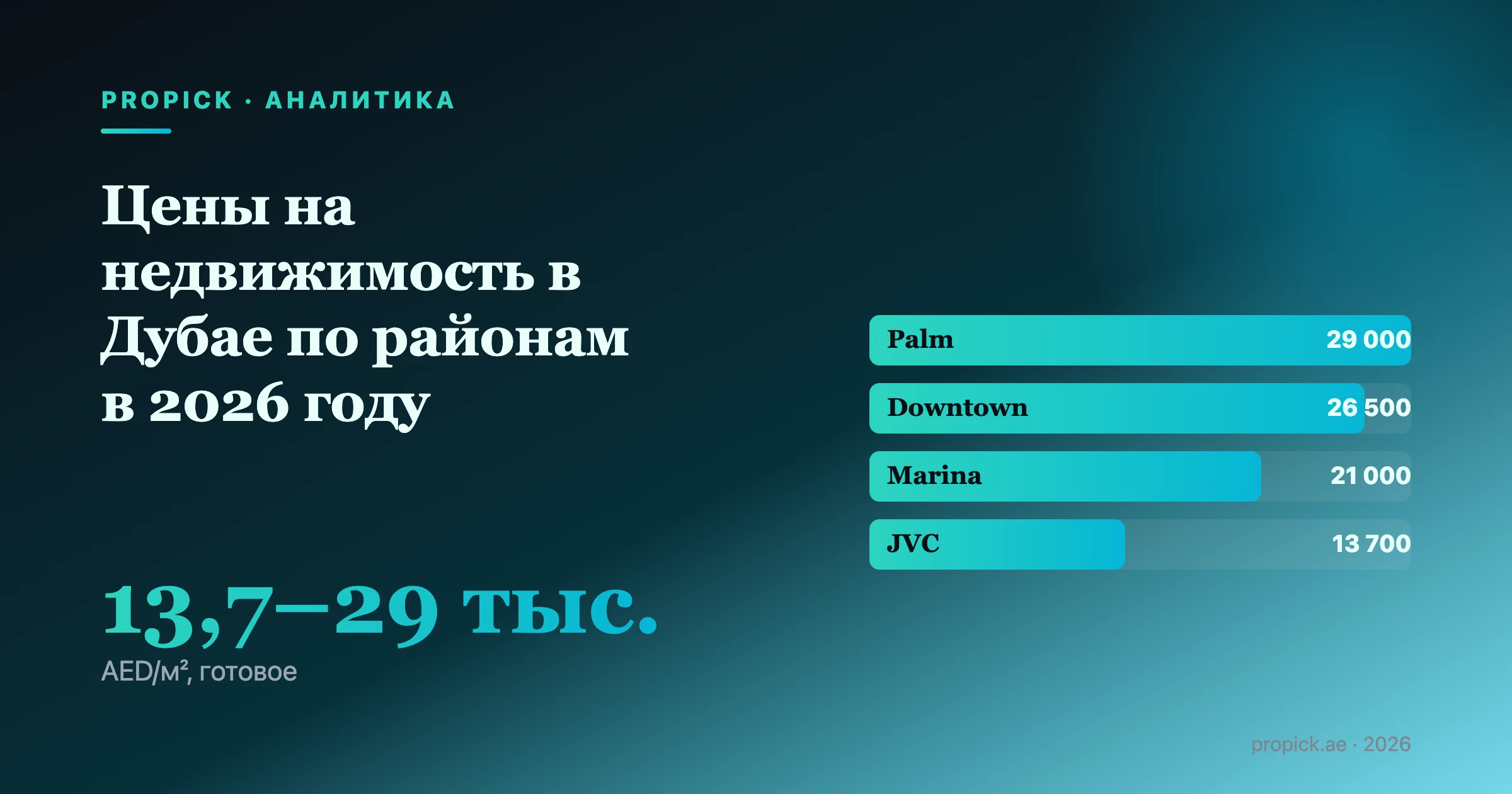
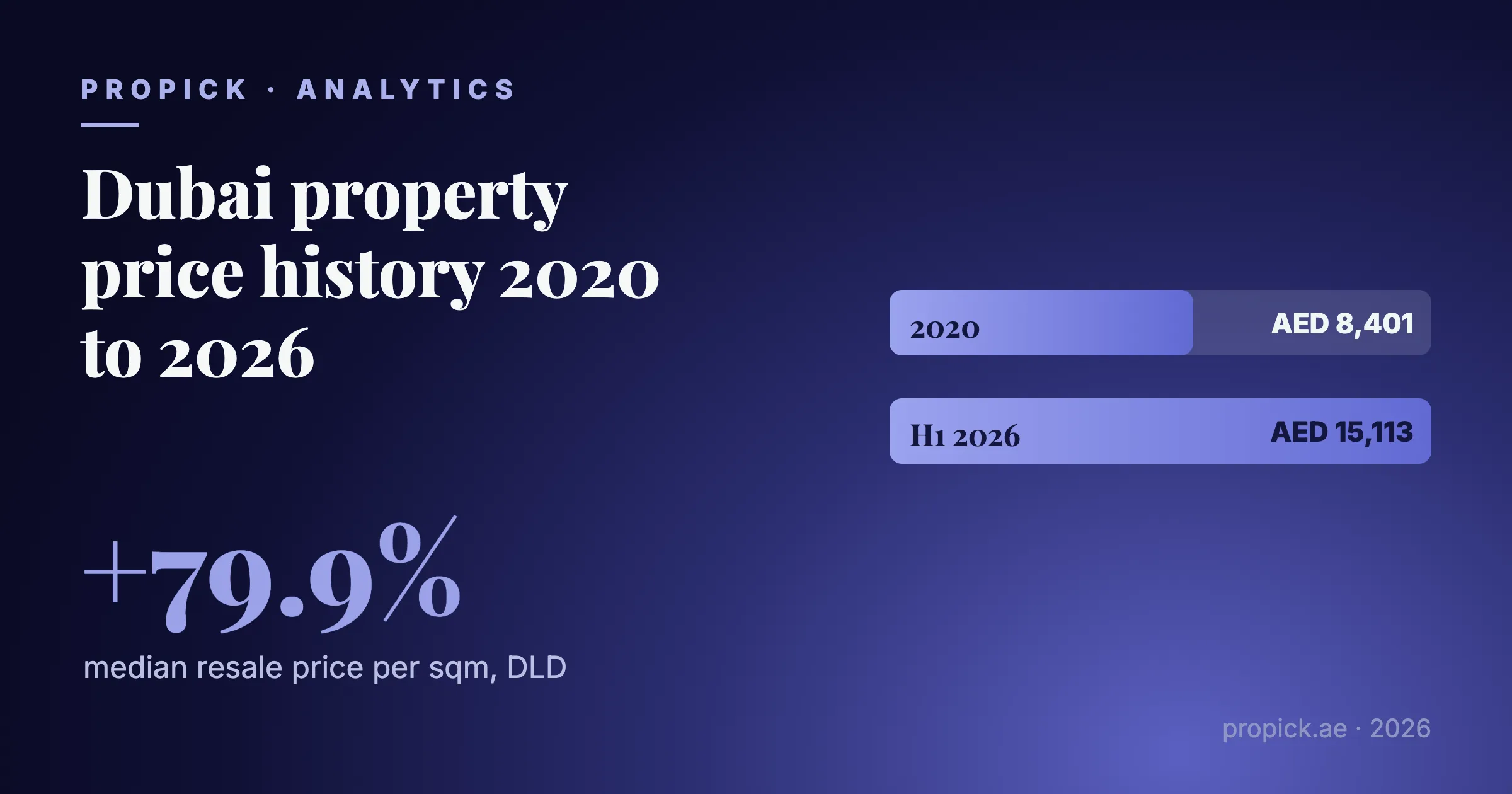
| Prime price per sqm, 2026 | Marina AED 19,360 (about USD 5,272 at the AED 3.6725 peg), Downtown AED 26,323 (about USD 7,168), Palm AED 28,702 (about USD 7,815) (DLD Open Data) | Paris apartments averaged EUR 9,530/sqm in April 2026, up just 0.4% year on year (Chambre des Notaires de Paris - Ile-de-France) |
| Gross rental yield | Prime 5.4-6.3%, affordable segments 7-9% (DLD) | No centralized official yield index; compressed by both price levels and rent caps that have been in force in Paris since 2019 (notaires.fr) |
Buying in: a flat 4% against a stacked frais de notaire
Dubai's entry cost is a single line item. The Dubai Land Department charges a 4% registration fee on the sale value, and while the rule does not legally assign the cost to either party, market convention is that the buyer settles it in practice (DLD). There is no separate transfer tax, no stamp duty, and no notary fee layered on top.
Paris works the opposite way. What buyers call "frais de notaire" is really a bundle of three things: droits de mutation (a departmental and municipal transfer duty of roughly 5.8% to 6.3% depending on the local rate), the notary's own tiered fee schedule (which falls as a percentage on higher-value properties, often close to 1% or less), and small fixed charges for land registry security and formalities (notaires.fr). Added together, this is why French buyers and notaries alike describe existing-home purchase costs as running 7-8% of price, roughly double Dubai's flat rate. New-build purchases carry a materially lower transfer duty, which is the main reason "off-plan" and "neuf" carry a pricing premium in French marketing.
Owning it: nothing recurring in Dubai, two separate French taxes
Once the keys are handed over, Dubai ownership carries no annual property tax. Paris ownership carries taxe fonciere every year, calculated from the property's cadastral rental value and automatically revalued in line with inflation data from INSEE; the 2025 revaluation coefficient added 1.7% to the base nationwide (impots.gouv.fr).
A second layer applies only to larger holdings: the IFI wealth tax, which is triggered once an individual's net taxable real estate wealth passes EUR 1,300,000 (impots.gouv.fr). At EUR 9,530/sqm, a single 100 sqm Paris apartment sits under that line on its own, but a couple holding two apartments, or one larger family home in a prime arrondissement, can cross the IFI threshold well before reaching what would be considered a large portfolio in Dubai terms. Dubai has no equivalent tax at any holding size.
Selling: zero capital gains tax against plus-value immobiliere
A Dubai sale carries no capital gains tax, full stop. A French sale of anything other than a principal residence is taxed on the gain at 19% income tax plus 17.2% social charges, a combined headline rate above 36% before any relief (impots.gouv.fr). Holding period relief chips away at that base every year: the taxable gain for income tax purposes reaches zero after 22 years of ownership, while the social-charges portion only zeroes out after 30 years. For an investor who buys, lets, and exits within a normal 5 to 10 year horizon, almost none of that relief has kicked in, so the tax largely applies to the full gain. The principal residence exemption is a genuine escape hatch, but it only helps an owner-occupier, not a buy-to-let investor.
Renting it out: yield without tax vs yield after tax and social charges
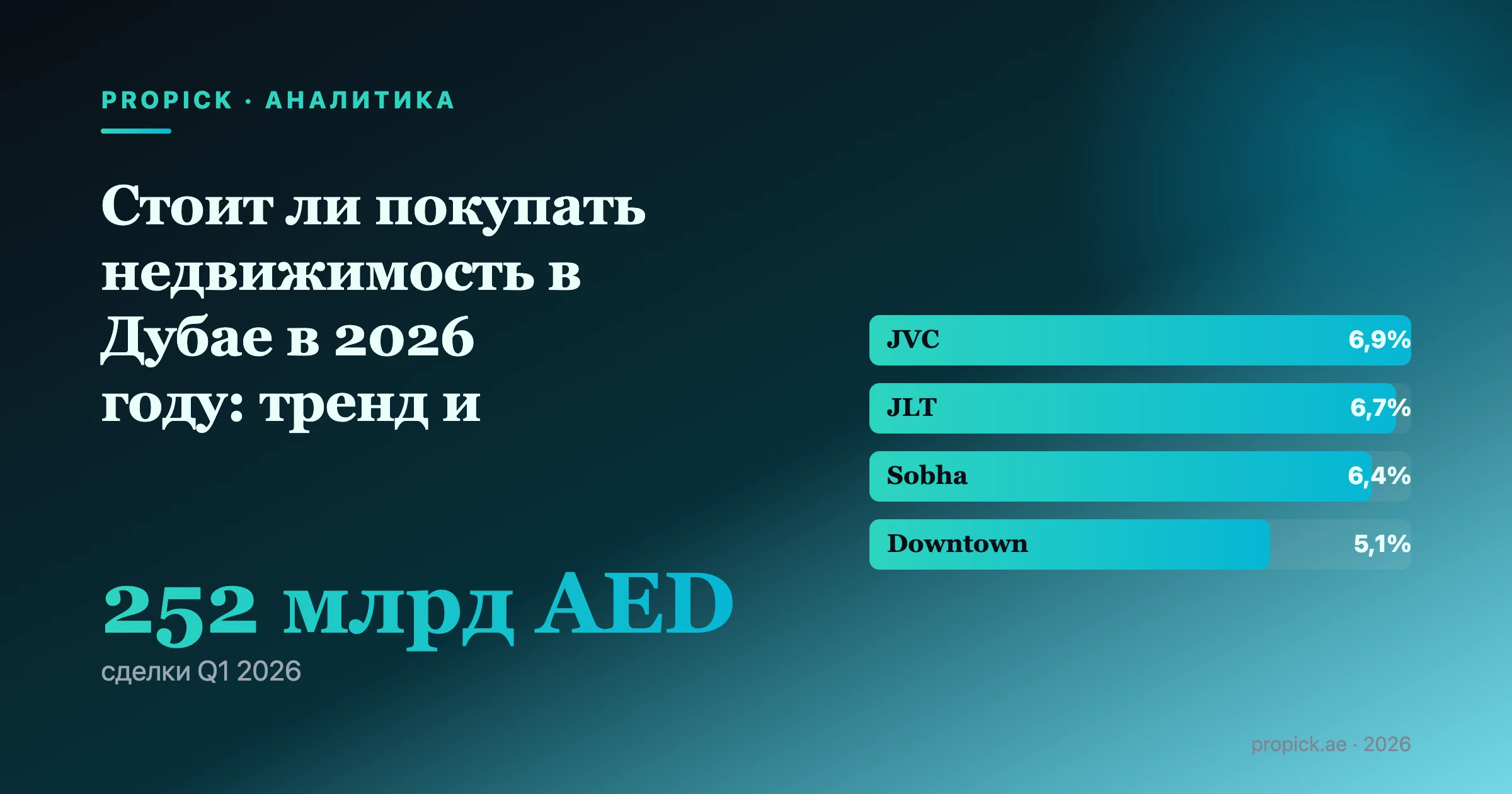
Dubai's gross yields, 5.4-6.3% in prime areas and 7-9% in more affordable segments according to DLD data, are also net of any income tax, because rental income is not taxed at all. In France, a non-resident landlord owes tax on rental income at the progressive scale that applies to French-source income, on top of social levies of 17.2% on unfurnished lets or 18.6% on furnished lets from 2025 income. Landlords covered by an EEA or Swiss social security system can avoid the CSG/CRDS components of that levy, but a 7.5% solidarity contribution still applies regardless (impots.gouv.fr). There is no single official index of Paris rental yields the way DLD publishes for Dubai, but the combination of a EUR 9,530/sqm entry price and rent caps in force across most of the city since 2019 structurally compresses whatever gross return exists, before this tax layer is even applied (notaires.fr).
So which one wins
Neither, universally. On pure after-tax cash return, Dubai is the more efficient vehicle by a wide margin: a lower entry cost, no recurring tax, no wealth tax, no capital gains tax, and yields that arrive untaxed. Paris offers something Dubai's numbers cannot: a mature, slow-moving, supply-constrained European capital with long-run price stability (a market up just 0.4% over twelve months is not exciting, but it is not volatile either), euro-denominated diversification, and the legal and lifestyle depth of owning in one of the world's most established residential markets. The honest framing is that Dubai wins on yield and simplicity, Paris wins on capital preservation and diversification, and the right allocation between them depends on what the rest of an investor's portfolio already looks like.
FAQ
Is Dubai's 4% DLD fee really the only cost of buying? It is the only government-mandated transfer cost. Buyers typically also budget for agency commission and small trustee and title fees, but there is no stamp duty or notary-style fee stacked on top, unlike in France (DLD).
Do non-resident foreign owners pay the IFI wealth tax on French property? The IFI applies once an individual's net taxable real estate wealth exceeds EUR 1,300,000, and the obligation to file is not limited to French residents (impots.gouv.fr). A single average Paris apartment sits below that threshold; a larger holding or a portfolio of French properties can cross it.
If I sell a Paris rental after 10 years, do I get any tax relief? Some, but not much. The taper relief schedule only reaches zero income tax after 22 years and zero social charges after 30 years, so at the 10-year mark the large majority of both components still applies to the gain (impots.gouv.fr).
Are Dubai rental yields really that much higher than Paris? On a gross basis, yes, by design of the two markets: Dubai's DLD-tracked yields run 5.4-6.3% in prime areas and 7-9% in more affordable ones (DLD), while Paris has no equivalent official yield index and combines a high entry price with rent caps that have applied citywide since 2019 (notaires.fr). The tax layer then reduces the Paris net figure further, while Dubai's stated yields are already tax-free.
Does the friction in France mean Paris is a bad investment? Not necessarily. Cost of ownership is only one variable. Paris offers currency diversification outside the dollar-pegged dirham, a track record measured in decades rather than years, and a different risk profile entirely. The comparison in this article is about the tax and fee stack specifically, not a verdict on which city's property will appreciate faster.
Sources
- Dubai Land Department, Property Sale Registration (4% registration fee): https://dubailand.gov.ae/en/eservices/property-sale-registration/
- Dubai Land Department, Open Data, Real Estate Data (prime prices and yields): https://dubailand.gov.ae/en/open-data/real-estate-data/
- Notaires de France, Les frais d'acquisition (droits de mutation and notary fee breakdown): https://www.notaires.fr/fr/immobilier-fiscalite/financement/les-frais-dacquisition
- Direction Generale des Finances Publiques, taxe fonciere calculation and 2025 revaluation: https://www.impots.gouv.fr/particulier/questions/comment-est-calculee-ma-taxe-fonciere-pourquoi-t-elle-augmente-en-2025
- Direction Generale des Finances Publiques, IFI declaration and EUR 1,300,000 threshold: https://www.impots.gouv.fr/particulier/questions/comment-declarer-limpot-sur-la-fortune-immobiliere-ifi
- Direction Generale des Finances Publiques, plus-value immobiliere (capital gains tax and taper relief): https://www.impots.gouv.fr/particulier/questions/je-vends-mon-bien-immobilier-vais-je-payer-de-la-plus-value-immobiliere
- Direction Generale des Finances Publiques, non-resident rental income tax treatment: https://www.impots.gouv.fr/international-particulier/questions/non-resident-i-receive-income-real-property-property-income-or
- Chambre des Notaires de Paris - Ile-de-France, Note de conjoncture immobiliere, February-April 2026 (Paris price per sqm): https://paris.notaires.fr/fr/presse/communication-immobiliere-mensuelle/conjoncture-immobiliere-en-ile-de-france-de-fevrier-avril-2026
- Notaires de France, rent control (encadrement des loyers) in effect in Paris since 2019: https://www.notaires.fr/fr/immobilier-fiscalite/location/location-encadrement-des-loyers-effectif-a-paris-en-2019