Every off-plan brochure in Dubai talks about price appreciation and rental yield. Almost none talk about the number that actually decides whether you can get your money out when you need to: how many buyers are trading in a given community, and how often.
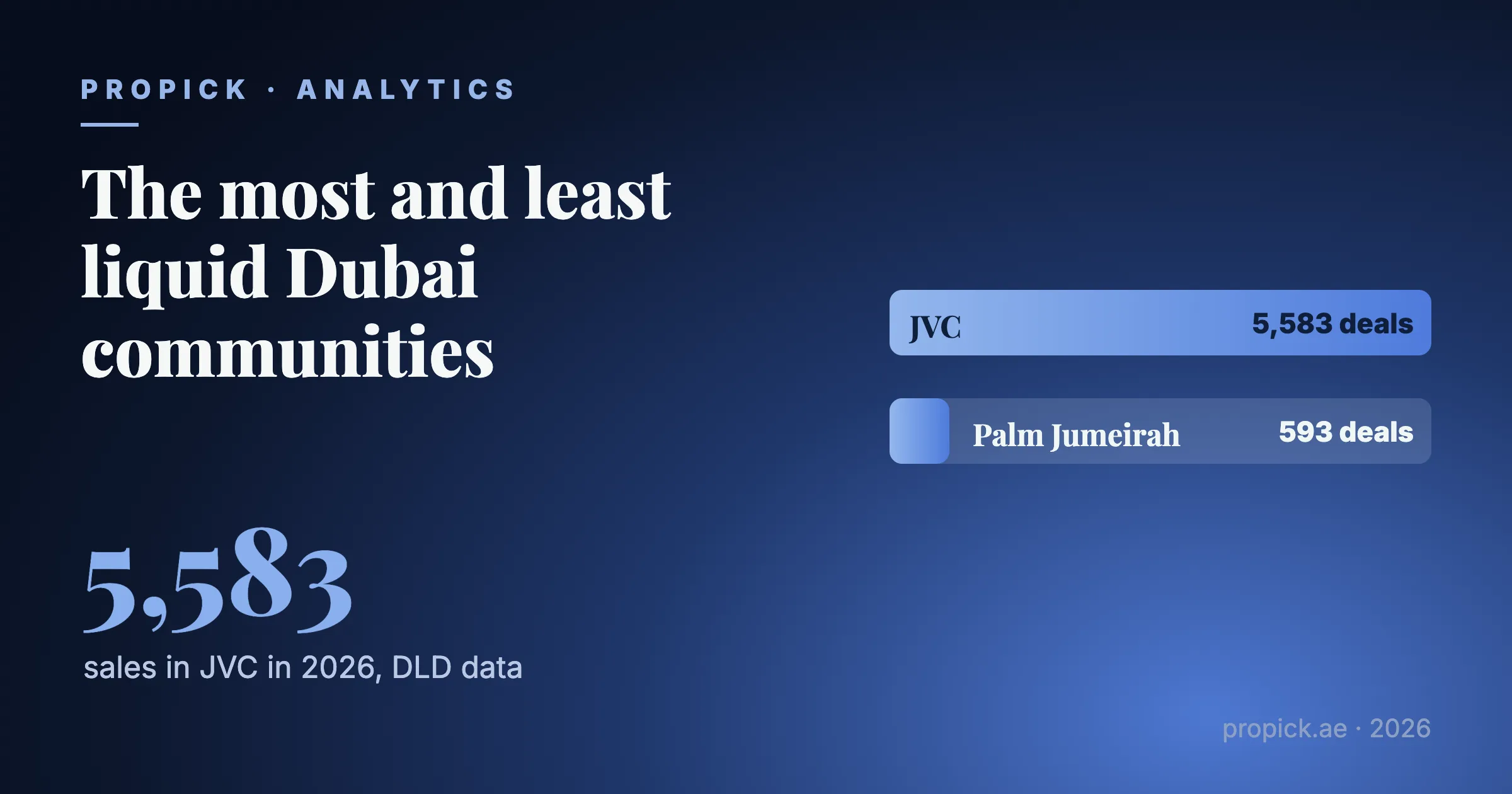
Propick pulled the full, paginated 2026 residential sales count from the Dubai Land Department's dld_transactions dataset across the 16 communities this journal tracks and ranked them by pure transaction volume, deal count year to date, not total value, not average ticket size. The result is a liquidity map nobody else in the Dubai market publishes. Jumeirah Village Circle (JVC) recorded 5,583 residential sales so far in 2026, almost twice the runner-up, Business Bay, on 2,829. At the opposite end, Palm Jumeirah, the emirate's most expensive address, recorded just 593 sales, the lowest of any community in this ranking.
Liquidity and price are two different questions, and mixing them up is how buyers get surprised at exit. A community can post strong price growth and still be hard to sell out of quickly if too few buyers are active in it at any given time. This article ranks all 16 communities by 2026 transaction volume, explains what that liquidity buys, or costs, a buyer, and cross-references it against the same communities' yield and price growth so you can see where cash flow, appreciation and exit speed line up, and where they pull apart.
Methodology
These figures are Propick's own analysis of DLD's dld_transactions dataset (residential sales, 2026 year to date, full pagination rather than a sample), grouped by master project. Price, gross yield and off-plan share use the same ready-resale (Existing) median methodology as our companion pieces on Dubai property prices by area and rental yield by area. Data as of July 2026.
Dubai's 2026 liquidity ranking, community by community
| Rank | Community | 2026 YTD sales | Median ticket, AED | Price, AED/sqm |
|---|---|---|---|---|
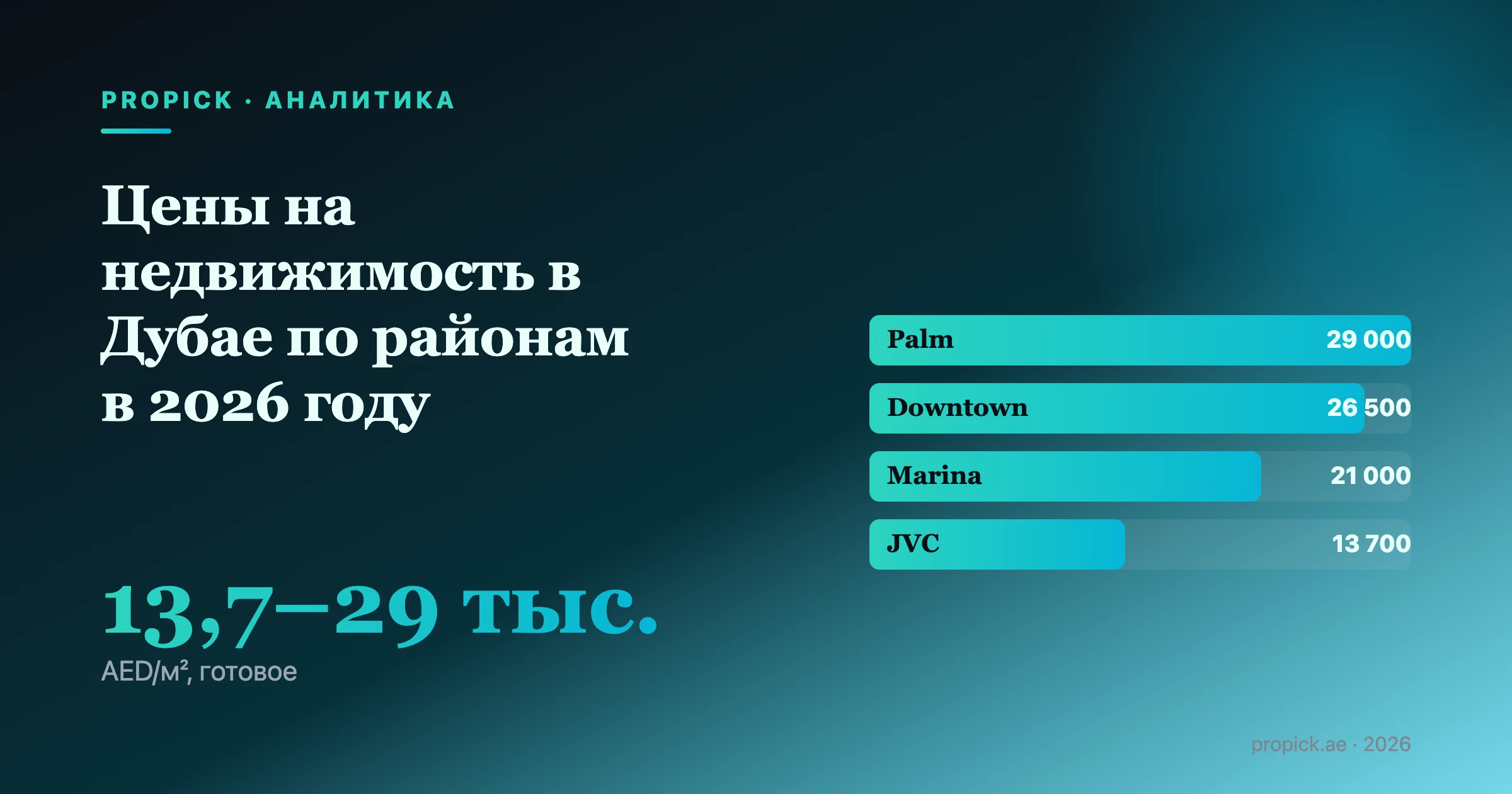
| 1 | JVC | 5,583 | 1,000,000¹ | 13,697 |
| 2 | Business Bay | 2,829 | n/a | 20,306 |
| 3 | Dubai Creek Harbour | 2,242 | n/a | 25,224 |
| 4 | Dubai South | 2,182 | 776,000 | 11,743 |
| 5 | JVT | 1,791 | 1,150,000 | 13,140 |
| 6 | Dubai Marina | 1,762 | 1,690,000¹ | 21,028 |
| 7 | JLT | 1,554 | n/a | 15,666 |
| 8 | Meydan | 1,534 | 1,460,000 | 16,630 |
| 9 | Dubai Sports City | 1,509 | 660,000 | 10,117 |
| 10 | Dubai Hills Estate | 1,199 | n/a | 25,022 |
| 11 | Town Square | 1,160 | 1,420,000 | 14,398 |
| 12 | Downtown Dubai | 1,048 | 2,000,000¹ | 26,478 |
| 13 | Al Furjan | 939 | 1,500,000 | 14,446 |
| 14 | DAMAC Hills | 799 | 1,900,000 | 15,405 |
| 15 | Sobha Hartland | 635 | n/a | 21,649 |
| 16 | Palm Jumeirah | 593 | n/a | 29,036 |
¹ 1BR median resale price, where DLD data breaks out bedroom type; unmarked figures are the community's overall median resale price across the unit mix. n/a marks communities where Propick's median-ticket analysis does not currently provide a comparable figure. Source: Propick analysis of DLD dld_transactions, full pagination, residential sales, 2026 YTD as of July 2026.
Price per square meter alone does not explain the ranking; Business Bay and Dubai Creek Harbour are both mid-to-high on price yet rank 2nd and 3rd on volume. What the top of the table shares instead is two things: an accessible entry ticket for at least part of the unit mix, and a large pipeline of off-plan stock completing and reaching the secondary market every year. At the bottom, Palm Jumeirah and Sobha Hartland combine a high entry ticket with a comparatively thin pipeline of newly-handed-over units, the two sections below unpack why.
What "liquidity" actually buys, or costs, a buyer
Liquidity is the practical answer to two questions: how fast could you sell if you needed to, and how confident can you be about the price you would get. Both depend on the same underlying fact: how many comparable, recent sales exist to anchor a fair asking price and attract a ready pool of buyers.
In a high-volume community like JVC, with over 5,500 sales this year alone, a seller can point to dozens of near-identical unit sales from the past few weeks, which narrows the gap between what a seller asks and what a buyer will pay, and shortens the time a unit sits on the market. In a community like Palm Jumeirah, with 593 sales spread across an entire year and a stock of villas and signature apartments that rarely repeat in configuration, comparables are thinner and price discovery is slower and more negotiation-driven. That does not make Palm a worse asset. It means the sale process takes longer and depends more on finding the right buyer than on matching an established market price.
Why the volume leaders trade so much
JVC, Business Bay, Dubai Creek Harbour and Dubai South share two traits: accessible entry tickets and a deep pipeline of newly handed-over stock feeding the resale market. JVC's median ticket of AED 1.0 million and Dubai Sports City's AED 660,000 (9th by volume, at 1,509 sales) put both within reach of first-time and overseas buyers, a far larger pool than the market for a Palm Jumeirah unit, the city's highest-priced community at AED 29,036 per square meter. At the same time, off-plan shares of 51% in JVC, 50% in Business Bay, 70% in Dubai Creek Harbour and 76% in Dubai South, per Propick's analysis of DLD's dld_transactions dataset broken out by sale type, mean a large share of units are completing and changing hands for the first time every year, which keeps transaction count structurally high. Business Bay's central location adds a second demand driver on top of its price advantage over neighboring Downtown, one reason it ranks 2nd overall despite a meaningfully higher price per square meter than JVC.
Why trophy stock barely turns over
Palm Jumeirah's 593 sales a year is not a sign of weak demand, it is a sign of structurally limited supply and long holding periods. At AED 29,036 per square meter, the highest of any community tracked here, buyers tend to be long-hold owner-occupiers or holiday-home investors rather than churn-focused traders, and the island has a hard physical ceiling on new units. Sobha Hartland, the second-least-liquid community at 635 sales, is a more interesting case: unlike other new-build communities, its off-plan share is comparatively low at 20%, per the same DLD dld_transactions breakdown by sale type, meaning less freshly-completed stock is arriving to force resale activity, while its price point (AED 21,649 per sqm) sits well above the volume-leading tier. Both communities illustrate the same principle: low turnover follows naturally from scarcity, high ticket size, or both.
Cross-referencing liquidity with yield and price growth
Volume alone does not tell you whether a community is a good buy, and neither does yield alone. The table below lines up liquidity rank, gross yield and year-on-year price growth for the nine communities where Propick has tracked all three metrics.
| Community | Liquidity rank | 2026 YTD sales | Gross yield | YoY price growth |
|---|---|---|---|---|
| Business Bay | 2 | 2,829 | 5.9% | +6.9% |
| Palm Jumeirah | 16 | 593 | 5.4% | +5.3% |
| Dubai Marina | 6 | 1,762 | 5.2% | +3.0% |
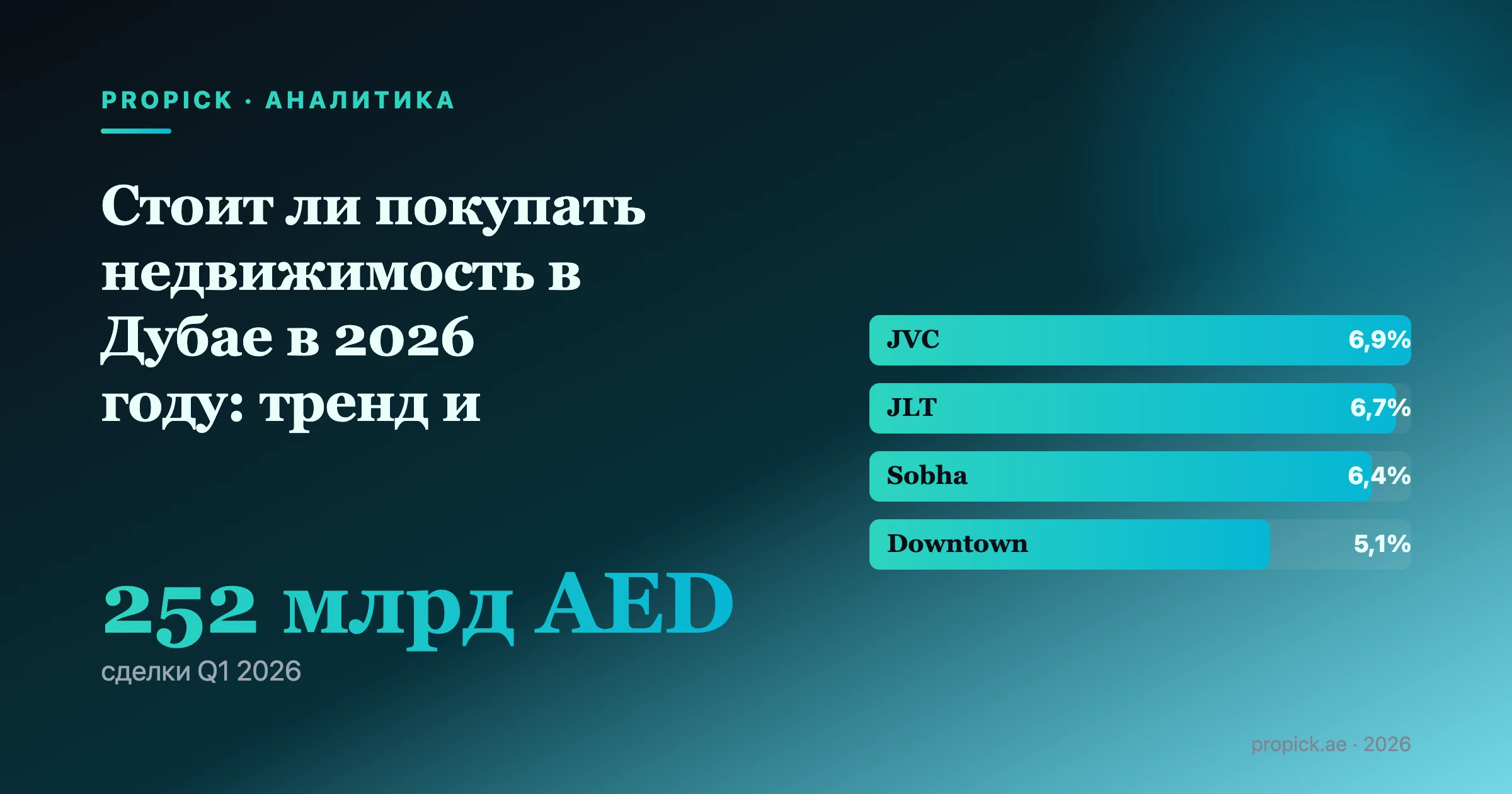
| JLT | 7 | 1,554 | 6.7% | +2.5% |
| Dubai Creek Harbour | 3 | 2,242 | 5.4% | +2.3% |
| Dubai Hills Estate | 10 | 1,199 | 6.1% | +1.3% |
| JVC | 1 | 5,583 | 6.9% | +1.2% |
| Downtown Dubai | 12 | 1,048 | 5.1% | -3.3% |
| Sobha Hartland | 15 | 635 | 6.4% | -4.2% |
Source: Propick analysis of DLD dld_transactions and dld_rent_contracts, ready-resale medians and YoY price change, 2025 to 2026.
Three findings stand out. Business Bay is the rare community that scores well on all three axes at once: 2nd for liquidity, a solid 5.9% yield, and the strongest price growth in this table at +6.9%. JVC, the single most liquid community, delivers the highest yield among the nine communities compared here, at 6.9%, but only modest price growth of +1.2%, confirming its identity as a cash-flow market rather than a capital-appreciation play. Palm Jumeirah sits at the opposite pole from JVC on liquidity, 16th out of 16, yet posts the second-strongest price growth at +5.3%, the classic scarcity trade-off: a slower, thinner market in exchange for a bigger prize when a sale does happen. Downtown Dubai and Sobha Hartland are the two caution flags here, both posting negative year-on-year price growth (-3.3% and -4.2%) alongside middling-to-low liquidity rankings (12th and 15th), a combination worth factoring into any near-term exit plan in either community.
Cash city: why exits aren't gated by mortgage approval
One structural reason Dubai's secondary market can move fast in high-volume communities: it is overwhelmingly a cash market. Across registered residential transactions in 2026, roughly 81% were outright sales versus about 14% mortgage registrations, per Propick's analysis of DLD's dld_transactions dataset broken out by registration type. That matters for liquidity because a sale that does not depend on a buyer's bank valuation and mortgage approval timeline can close in days rather than weeks, removing one of the biggest sources of deal breakdown in more mortgage-dependent markets.
The transfer process is also uniform regardless of community: a 4% DLD registration fee, in practice almost always paid in full by the buyer on the secondary market, is settled at the point of transfer of ownership, the same day, at any DLD trustee office. So the liquidity gap between JVC and Palm Jumeirah is a demand-and-supply story, not a difference in how fast the paperwork moves. For what selling costs on top of that fee, see our guide to the costs of selling property in Dubai.
What this means for your strategy
If your priority is exiting quickly with price confidence, the data points to JVC, Business Bay, Dubai South and Dubai Sports City, communities with deep, active buyer pools and dense recent comparables. If your priority is long-run capital appreciation and you can accept a slower, more negotiation-driven sale, Palm Jumeirah's combination of low liquidity and strong price growth is the honest trade-off to plan around, not a flaw to avoid. Communities in the middle, Dubai Marina, JLT and Dubai Hills Estate, balance decent turnover with positive price momentum. Downtown Dubai and Sobha Hartland sit in the least comfortable spot: below-average liquidity paired with falling prices, worth watching rather than avoiding outright, but not a combination to buy into without a clear multi-year holding plan.
FAQ
Which Dubai community is the most liquid in 2026? Jumeirah Village Circle (JVC), with 5,583 residential sales registered in 2026 year to date, almost twice the volume of the second-placed community, Business Bay, at 2,829, per Propick's analysis of DLD dld_transactions data.
Which Dubai community is the least liquid? Palm Jumeirah, with 593 residential sales in 2026 year to date, the lowest of the 16 communities tracked, reflecting its structurally limited supply, high ticket size and long owner holding periods rather than weak demand.
Does higher liquidity mean lower returns? Not necessarily. JVC combines the highest liquidity with the highest gross yield among the nine communities in this cross-reference, 6.9%, though modest 1.2% price growth. Business Bay combines strong liquidity (2nd) with a solid 5.9% yield and the highest price growth in this data, +6.9%.
Is Palm Jumeirah a bad investment because it has the lowest liquidity? No. Low turnover on Palm reflects scarcity and long-hold ownership, not weak demand. It posted the second-strongest year-on-year price growth in this analysis, +5.3%, meaning buyers trade exit speed for a larger potential gain.
How is "liquidity" defined and measured in this article? As the full count of registered residential sales transactions per community for 2026 year to date, sourced from DLD's dld_transactions dataset via full pagination, not a sample.
Does financing availability affect how liquid a Dubai community is? Indirectly. Citywide, around 81% of registered residential transactions in 2026 were outright cash sales versus about 14% mortgage registrations, per Propick's analysis of DLD's dld_transactions dataset, so turnover is largely not gated by bank valuation timelines the way more mortgage-dependent markets are.
Sources
- Dubai Land Department / DLD Open Data, dld_transactions dataset (transaction volume, off-plan vs. ready-resale share, and cash vs. mortgage registration type): https://dubailand.gov.ae/en/open-data/real-estate-data/
- Dubai Land Department / DLD Open Data, dld_rent_contracts dataset: https://dubailand.gov.ae/en/open-data/real-estate-data/
- Dubai Land Department, Procedure Fee Calculator (4% registration fee): https://dubailand.gov.ae/en/about-dubai-land-department/procedure-fee-calculator/
- Dubai Land Department, Transfer of Ownership e-service: https://dubailand.gov.ae/en/eservices/request-for-transfer-of-ownership/
- Dubai Land Department, Open Data portal: https://dubailand.gov.ae/en/open-data/real-estate-data/